
Blog
Walking for Weight Loss on a GLP-1: What Your Steps Really Measure

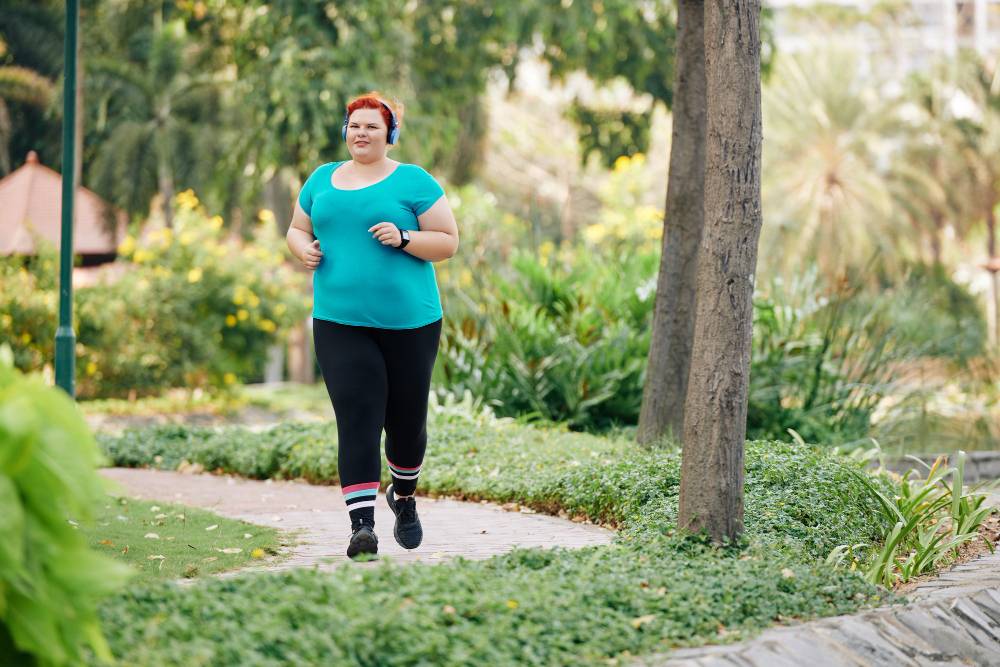
Walking for weight loss has no official step number. The CDC adult guidance is written in minutes at a moderate effort, and no source in this guide ties a step count to a body outcome.
That matters on semaglutide or tirzepatide, where appetite is smaller and dizziness is a real reason to stop. A step count is a log of movement. It is not a score, a promise or a dose.
This guide covers what a step is, what step research measured, the exact CDC wording, a progression with no calendar and the signs that mean stop and ask for care.
| Read this first. Compounded semaglutide and compounded tirzepatide are not FDA approved and have not been reviewed by the FDA for safety, efficacy or quality. Any FDA label quoted below belongs to a branded product. Compounded preparations have no approved label and no rates of their own. Results vary by individual. |
Table of Contents
Walking for Weight Loss and Step Counts: What Numbers Cannot Tell You
Most pages on walking for weight loss open with a step target and attach a result to it. This guide leaves the result out. No step count can promise one.
| Common claim | What the published sources say | Source |
| 10,000 steps is the number for everyone | Device researchers wrote that the recommendation “may not be accurate for all users of all activity monitors.” | Nelson et al., Preventing Chronic Disease, 2022 |
| More steps are always better | More steps were linked to lower risk of death from any cause “up to a level that varied by age.” The study measured deaths, not body weight. | Paluch et al., The Lancet Public Health, 2022 |
| Walking only counts if you hit a step target | The CDC lists “At least 150 minutes a week of moderate-intensity activity such as brisk walking.” The wording uses minutes. | CDC |
| Only a hard push is worth doing | The CDC says “Some physical activity is better than none.” | CDC |
Steps make a useful log. Minutes at a moderate effort are the official yardstick. Neither one is a recipe for any result, and results vary by individual.
Walking for Weight Loss Trackers: What Counts as a Step
A tracker infers steps from motion, and where the device sits changes what it senses. That affects any walking for weight loss log. The same walk can produce different numbers on a phone, a watch and a clip-on pedometer.
| What the researchers compared | What the study reported | What it means for you |
| Wrist-worn monitors and hip-worn pedometers on a treadmill | “Fewer steps were accumulated via wrist-worn PA monitors than via hip-worn pedometers during treadmill exercise.” | A steady walk can read lower on a wrist device than on a hip device |
| The same two device types during activities of daily living | “More steps were accumulated via wrist-worn PA monitors than hip-worn pedometers during ADL.” | A day of chores can read higher on a wrist device |
| The reason for the gap | “Differences in steps between devices appeared to be largely due to device location.” | Where you wear it matters as much as which brand you wear |
The study is from the CDC journal Preventing Chronic Disease. A friend’s number and your number cannot be compared. Your own device against your own earlier walks is the only fair comparison.
- Use one device. Switching from a phone to a watch resets your numbers.
- Wear it the same way. Keep it on the same wrist, pocket or hip.
- Judge the pattern. One low reading tells you very little about your walking for weight loss routine.
Walking for Weight Loss and Step Research: What the Big Studies Measured
Large step studies exist, and they measured health outcomes, not walking for weight loss. One example is a 2022 meta-analysis in The Lancet Public Health that pooled 15 international cohorts. It did not test body weight.
Its interpretation says: “Taking more steps per day was associated with a progressively lower risk of all-cause mortality.” It adds “up to a level that varied by age.”
| Age group in the study | Where the association levelled off | What was measured |
| Adults aged 60 years and older | About 6000 to 8000 steps per day | Risk of death from any cause |
| Adults younger than 60 years | About 8000 to 10000 steps per day | Risk of death from any cause |
Two limits keep this honest. The word “associated” means the study observed people and assigned no one a step goal.
That is a finding about population health. It is not a target for walking for weight loss, and it says nothing about body weight. If you want a number, your provider can say what suits your health.
Walking for Weight Loss Guidance: Exact CDC Wording on Minutes
The CDC overview for adults says: “adults need 150 minutes of moderate-intensity physical activity a week.” The CDC activity page names walking as an example: “At least 150 minutes a week of moderate-intensity activity such as brisk walking.”
These lines are general health guidance. They are not a recipe for walking for weight loss or any other result. Two more CDC lines help when you start from little: “If you are unable to meet the recommendations, be as active as you can,” and “you don’t have to do it all at once.”
Walking for Weight Loss Pace and the Talk Test: How to Tell Moderate From Hard
The CDC gives a plain rule: “As a rule of thumb, a person doing moderate-intensity aerobic activity can talk, but not sing, during the activity.” It also describes moderate effort as “a level of effort of 5 or 6 on a scale of 0 to 10.”
| Effort | What you can do while walking | Where it sits |
| Easy stroll | Talk and sing without trouble | Lighter than the CDC moderate range |
| Moderate | Talk, but not sing | The CDC moderate range, 5 or 6 on a scale of 0 to 10 |
| Vigorous | Say only a few words without pausing to breathe | Harder than moderate |
The CDC adds that “Physical activity that requires moderate effort is safe for most people,” and advises you to “talk with your doctor about the types and amounts of physical activity that are right for you.” Walking for weight loss starts with that talk when your health history is unclear.
Walking for Weight Loss From a Low Baseline: Start Where You Are
Start with the walking you already do. Set no new target for walking for weight loss first. MedlinePlus states the core rule: “The key is to push slowly and gradually.”
MedlinePlus names three things to avoid raising at the same time:
- Number of days you exercise. Add a walking day, or lengthen a walk, but not both at once.
- Length of time you exercise. Lengthen a walk, but keep the pace the same.
- How hard you work out. Raise the pace only after the length feels easy.
MedlinePlus also says: “If you have not been active, or have a health condition, talk with your health care provider to make sure you are healthy enough for exercise.” Use the table below after that talk.
| Where you are now | One change to make | Hold here until |
| You move around the house and run errands | Add one short, easy walk | The walk feels easy and you finish without strain |
| The short walk feels easy | Make the same walk a little longer at the same pace | The longer walk feels comfortable the next time you do it |
| The longer walk feels comfortable | Add one more walking day of the same length and pace | The extra day fits your routine |
| Your walks feel steady | Pick up the pace until you can talk but not sing | The moderate pace feels manageable |
| Your moderate walks feel manageable | Ask your provider about adding strength work | You have a plan that suits your health |
Your body sets the pace, not a calendar. If a change feels like too much, go back to the last comfortable step and hold there. MedlinePlus also advises that “The easiest way to warm up is to exercise slowly for the first few minutes, then pick up the pace.”
Walking for Weight Loss With a Small Appetite: Fuel, Fluids and Dizziness
Semaglutide and tirzepatide lower appetite. Walking for weight loss on a day when you have eaten very little needs extra care. So does a walk on a day with nausea, vomiting or diarrhea.
The Wegovy label says the medicine is “indicated in combination with a reduced calorie diet and increased physical activity.” The Zepbound label uses matching words. Both are branded products, and compounded preparations have no approved label.
| Label fact (branded product) | Exact wording | Why it matters on a walk |
| Fluid loss and the kidneys | Wegovy Section 5.5: “The majority of the reported events occurred in patients who experienced gastrointestinal adverse reactions leading to dehydration such as nausea, vomiting, or diarrhea.” Zepbound Section 5.3 carries a matching warning. | Vomiting and diarrhea already drain fluid, and a walk adds more |
| Dizziness | “Dizziness” appears among the adverse reactions in the Wegovy trial table in Section 6.1. | A dizzy spell on a walk is worth reporting |
| Blood glucose | Wegovy Section 5.4: “WEGOVY lowers blood glucose and can cause hypoglycemia.” | Tell your provider about any other medicine that lowers blood glucose |
The CDC water page says “Getting enough water every day is important for health.” It lists being “More physically active” among the times your body needs more water, along with diarrhea and vomiting. It also advises: “Carry a reusable water bottle with you.”
- Carry water on every walk. Sip as you go.
- Go easier on low appetite days. Keep the walk short and the pace gentle.
- Skip the walk when you feel sick. The nausea guide and the diarrhea guide cover those days.
- Ask support about fueling. AHC support can say how to fit a walk around a small appetite.
Walking for Weight Loss Situation and Action Table
Use this table as a quick check before and during walking for weight loss. It does not replace your provider.
| Situation today | Action for the walk | Escalate when |
| Appetite is very low and you have eaten little | Keep the walk short and easy, carry water and stop if you feel unwell | Dizziness returns or eating stays very low: tell AHC support |
| You feel nauseated | Skip the walk and rest | Vomiting becomes repeated or severe: seek medical care |
| You have vomiting or diarrhea | Skip the walk, because the CDC lists both among times fluid needs rise | Symptoms last or fluids will not stay down: contact AHC support or seek care |
| The weather is hot | Carry water and keep the pace easy, because the CDC lists hot climates among times you need more water | Dizziness, faintness or confusion: stop and seek care |
| You feel lightheaded during a walk | Stop walking and sit down | It returns, or you faint: seek medical care |
| A muscle or joint hurts | MedlinePlus says: “If you feel pain, stop right away.” | Pain that does not go away: contact your provider |
Seven Honest Rules for Walking for Weight Loss, in One List
These seven rules for walking for weight loss pull the sources above into one list. Each one leaves weight outcomes out on purpose.
- Use one device and wear it the same way. Device location changes the count.
- Treat steps as a log, not a grade. Research measured health outcomes, not body weight.
- Pace by the talk test. Moderate means you can talk but not sing.
- Change one thing at a time. Raise days, length or pace separately, and hold until it feels comfortable.
- Carry water and match the walk to your day. Go easier or skip the walk when appetite is low or you feel sick.
- Stop for warning signs. Chest pain, fainting and repeated dizziness call for medical care, not a push.
- Keep strength work in the picture. The CDC says “adults need at least 2 days of muscle-strengthening activity each week.”
When Walking for Weight Loss Should Stop: Warning Signs That Need Care
Some signs mean walking for weight loss is over for the day. These are escalation only. Stop walking and seek medical care, or contact AHC support, if you notice any of them:
- Chest pain during or after exercise. MedlinePlus lists this under going to the hospital right away or calling 911.
- Fainting or near fainting
- Dizziness that is severe or keeps coming back
- Severe or repeated vomiting, or fluids that will not stay down
- Severe abdominal pain
- Signs of a serious allergic reaction
- A serious injury, severe pain or a joint that looks out of position
Do not try home fixes and do not push through. Reach AHC support by live chat on the website or at [email protected]. Dose or plan changes go through AHC support, where the medical officer reviews them. Never change, skip or double a dose on your own.
The complete GLP-1 side effects guide explains when to call your provider.
Where Walking for Weight Loss Fits Beside Strength Work
Walking for weight loss is one piece of movement. AHC pages cover the rest.
- Strength work. The 3-day strength protocol covers the muscle side.
- The wider exercise picture. The semaglutide and exercise guide covers the wider picture.
- Other workouts. The best exercises while on semaglutide guide covers other options.
- Working out near an injection. The semaglutide injection and workout timing guide covers timing.
Walking for Weight Loss FAQs: Quick Answers on Steps and Safety
How many steps do I need for walking for weight loss?
There is no official step number for it. The CDC guidance is written in minutes at a moderate effort, and no step count promises a result.
Do I have to reach 10,000 steps?
No. Researchers wrote that the 10,000 step recommendation “may not be accurate for all users of all activity monitors.”
Is walking for weight loss better done fast or for longer?
The CDC measures moderate effort in minutes and says you can break activity into smaller chunks. Pick the version you can repeat.
What counts as a step on my phone or watch?
Your device infers steps from motion, and its position changes the count. Compare only with your own earlier walks.
What pace counts as moderate?
The CDC rule of thumb is that you can talk, but not sing. It also places moderate effort at 5 or 6 on a scale of 0 to 10.
Can I walk on a day when my appetite is very low?
Keep the walk short and easy, and carry water. For walking for weight loss on low appetite days, if eating stays very low or dizziness returns, tell AHC support.
Should I drink more water when I walk on semaglutide or tirzepatide?
The CDC says your body needs more water when you are more physically active. Ask AHC support how much suits you.
Is walking for weight loss safe if I feel dizzy?
Stop the walk and sit down. With walking for weight loss, if dizziness returns, becomes severe or comes with fainting, seek medical care or contact AHC support.
How do I start walking for weight loss if I am out of shape?
Start where you are and change one thing at a time. Hold until it feels comfortable. Talk with your provider first if you have not been active.
Should I change my medicine because of my step count?
No. Never change your medicine on your own. Send questions to AHC support.
Conclusion: Walking for Weight Loss Is a Habit to Repeat, Not a Number to Hit
Walking for weight loss comes down to a habit you can repeat, not a number to hit. Use one device, pace by the talk test and change one thing at a time. Results vary by individual.
Treat dizziness, chest pain, fainting and repeated vomiting as reasons to stop. Those need medical care or AHC support, not another lap.
Thinking about starting treatment? Begin your evaluation to complete the medical intake. A licensed provider reviews every order and decides whether treatment fits you. Approval is never automatic.
Medical Disclaimer
This article is general education and is not medical advice. It does not create a doctor patient relationship. Compounded semaglutide and compounded tirzepatide are not FDA approved and have not been reviewed by the FDA for safety, efficacy or quality. Brand names are used for educational identification only and belong to their trademark owners. Results vary by individual and depend on adherence, clinical guidance and lifestyle factors. For chest pain, fainting, severe vomiting or severe abdominal pain, seek medical care or contact AHC support.