
Blog
Visceral Fat in Men and How to Track It

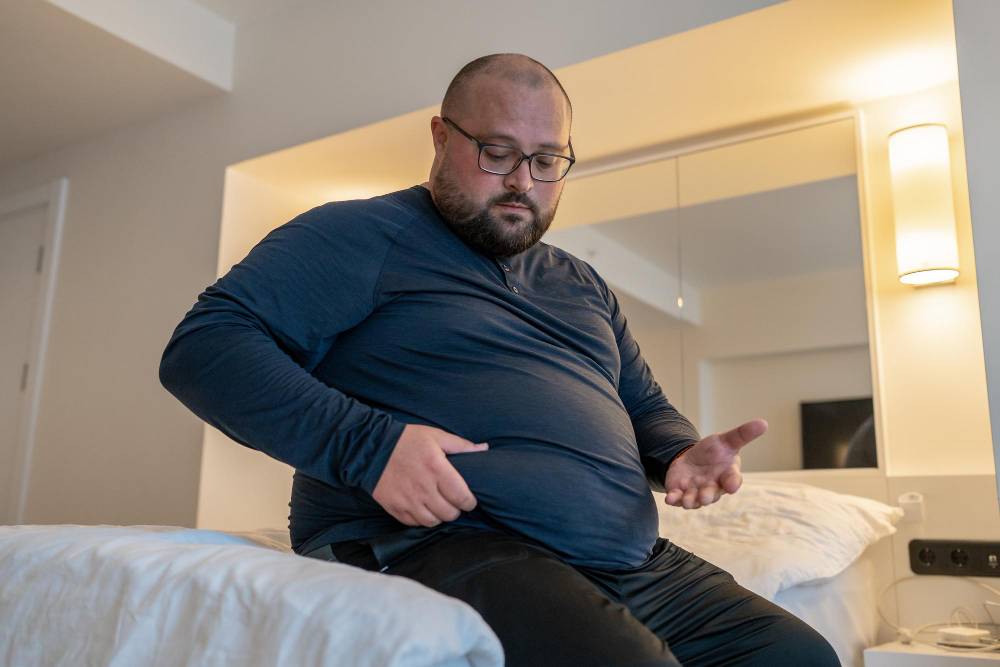
Visceral fat in men is the deep fat packed around the liver, intestines and other organs, and men carry more of it than women at the same weight. The average US man aged 20 and over had a waist of about 103 centimeters, or 40.5 inches, in the 2015 to 2018 national health survey, which sits right at the threshold that international guidelines flag as high risk for men.
A man can look only slightly heavy and still carry a large amount of it. This guide covers why men store fat this way, what it does to health, how to measure it at home, what moves it, and how it comes up during GLP-1 treatment at AHC.
| Key points Visceral fat is metabolically active and tracks with blood pressure, blood sugar and blood fats more closely than fat under the skin. Men tend to store fat centrally from early adulthood and keep adding to the deep depot into their seventies. A waist measurement and a waist-to-height ratio capture most of what a scan would tell you, and both respond to weight loss, exercise and sleep. |
Why Do Men Store More Visceral Fat?
Visceral fat in men builds up because sex hormones, fat cell biology and age all push fat toward the abdomen. Women tend to store fat at the hips and thighs until menopause, which is why the apple and pear shapes exist.
- Sex hormones. A 2012 review in Biology of Sex Differences from Boston University describes how sex steroids steer fat toward the abdomen in men and the hips and thighs in women.
- Fat cell behavior. The same review points to intrinsic differences in fat cells from different depots.
- Age. In a 2023 UK Biobank analysis of MRI scans in the Journal of Cachexia, Sarcopenia and Muscle, median visceral fat volume in men was higher at age 70 than at 45, while abdominal fat under the skin was lower.
- Sleep. A 2022 inpatient trial in the Journal of the American College of Cardiology found that two weeks of short sleep increased visceral fat in healthy adults, most of them men.
The age finding matters because visceral fat in men keeps growing even when total fat does not. A man whose weight has been stable for a decade can still have gained deep fat in that time. Our guide to GLP-1 treatment after 50 covers how that shifts the picture for older men.
Why Visceral Fat in Men Is a Health Risk
Visceral fat in men matters more than total fat because it sits beside the liver and releases fatty acids and inflammatory signals into the blood supply that feeds it. Fat under the skin does not drain into the liver in the same way. The Framingham Heart Study made that link concrete.
| Marker | What the research shows | Source |
| Metabolic syndrome | Odds rose about four-fold per standard deviation of visceral fat in men, a stronger link than for fat under the skin | Framingham Heart Study, Circulation, 2007 |
| Blood pressure, glucose, blood fats | All associated with visceral fat in men after adjustment for BMI and waist | Same study, 3,001 adults scanned by CT |
| Mortality | Waist circumference predicts death within every BMI category | IAS and ICCR consensus, Nature Reviews Endocrinology, 2020 |
The 2007 Framingham analysis, led by Caroline Fox at the National Heart, Lung, and Blood Institute, found that visceral fat explained risk factor variation even after BMI and waist were accounted for. That is why the 2020 consensus statement from the International Atherosclerosis Society and the International Chair on Cardiometabolic Risk asks clinics to measure waist circumference routinely alongside BMI. Our post on semaglutide and heart health covers the cardiovascular side.
How Can Men Measure Visceral Fat at Home?
A tape measure is the best home tool for visceral fat in men, because waist circumference and waist-to-height ratio track the deep depot closely and cost nothing. Scans are more precise but are not needed to follow a trend.
| Method | How it works | Accuracy and limits |
| Waist circumference | Tape midway between the bottom of the ribs and the top of the hips, after breathing out | The measure guidelines use. Needs the same landmark every time |
| Waist-to-height ratio | Waist divided by height, same units | NICE classes under 0.5 as healthy, 0.5 to 0.59 as increased, 0.6 and over as high central adiposity |
| Body composition scales | Send a small current through the body and estimate a visceral fat level | Convenient, but an estimate that shifts with hydration |
| MRI or CT | Direct imaging of the visceral depot | The gold standard, used in research, rarely needed for an individual |
The waist thresholds in common use are 102 centimeters, or 40 inches, for men and 88 centimeters for women, though the 2020 consensus notes that these cutoffs need refining by age and ethnicity. Measure monthly, same tape, same time of day. A visceral fat estimate from your waist and height, covered in the Tools section, gives you a number to track.
What Changes Visceral Fat in Men?
Visceral fat in men responds to weight loss, exercise and sleep, and it tends to fall faster in relative terms than fat under the skin. The depot that carries the most risk is also the one that moves first.
| Lever | What the evidence shows | Source |
| Weight loss by any route | Visceral fat fell by a larger share of its starting amount than fat under the skin in pooled results | Meta-analysis of 89 studies, International Journal of Obesity, 2017 |
| Exercise without weight loss | Exercise training reduced visceral fat even when the scale did not move, while diet alone showed almost no change without weight loss | Meta-analysis of 117 studies with 4,815 participants, Obesity Reviews, 2016 |
| Sleep | Two weeks of four hours in bed raised calorie intake, weight and visceral fat in a randomized crossover trial | 12 adults, Journal of the American College of Cardiology, 2022 |
The 2016 meta-analysis from Radboud University Medical Center is the key finding for men who exercise and see no change on the scale. Rob Verheggen and colleagues found only a modest link between weight change and visceral fat change after exercise, so the scale is a poor guide to whether training is working. Our piece on where fat goes when you lose it explains what happens to the fat itself.
What Research Shows About Visceral Fat on GLP-1 Treatment
GLP-1 trials measured waist circumference and, in substudies, body composition, and both moved more on study medication than on placebo. The trials describe mixed groups rather than visceral fat in men specifically, and used study medication rather than compounded products.
| Study and design | Who took part | What researchers found |
| 2021, New England Journal of Medicine. Placebo-controlled, 68 weeks | 1,961 adults with overweight or obesity, weekly semaglutide study medication | Greater improvement in waist circumference than placebo, alongside blood pressure and blood fats |
| 2025, Diabetes, Obesity and Metabolism. DEXA substudy of the 2022 tirzepatide trial | 160 adults scanned at baseline and 72 weeks, 27 percent men | Fat mass fell more than on placebo, and most of the weight lost was fat in both groups, with the proportion similar in men and women |
| 2026, Journal of Endocrinological Investigation. Post hoc analysis of the same trial | 2,538 participants grouped by waist-to-height ratio | A larger share moved to a lower waist-to-height category than on placebo |
Placebo-controlled means one group received an inactive comparison. The 2021 trial was funded by the maker of semaglutide, and the 2025 and 2026 analyses by the maker of tirzepatide, with several authors employed there. Lean mass fell as well as fat mass in the DEXA substudy, which is why protein and resistance training matter, covered in our post on semaglutide and muscle loss.
Visceral Fat in Men During GLP-1 Treatment at AHC
Many men notice the waist loosening before the scale moves much, which fits the research on visceral fat in men leaving first. Timing varies widely, and early doses at AHC are intentionally mild, so the first weeks may show no change.
| What you notice | What it may reflect | What to do at AHC |
| Belt loosens, weight barely changes | Visceral fat and water shifting before total weight | Record a monthly waist measurement and keep the same injection day |
| Weight falls, waist does not | Early loss from water or lean tissue | Check your protein target and add resistance work |
| Nothing changes for several weeks | Titration starts low on purpose | Follow your dosage email. Dose changes come only after a clinical review |
Dose changes are never automatic. Contact AHC support through live chat on the website or at [email protected], and AHC’s medical officer reviews the request. Results vary by individual and depend on adherence, clinical guidance, and lifestyle factors.
| About compounded medication Compounded semaglutide and compounded tirzepatide are prepared by state-licensed pharmacy partners held to the same quality and safety standards. They are not FDA-approved and have not been reviewed by the FDA for safety, efficacy or quality. |
How to Track Visceral Fat in Men Month by Month
Tracking visceral fat in men takes five minutes a month. The point is the trend, not any single reading.
- Pick a fixed day. First Sunday morning of the month, before breakfast, after using the bathroom.
- Find the landmark. Feel for the bottom of your ribs and the top of your hip bones, and measure midway between them.
- Breathe out, do not pull in. Let the tape sit snug without compressing the skin.
- Calculate the ratio. Divide waist by height in the same units and note whether it is under 0.5.
- Add weight and sleep. Note the scale reading and your average sleep that week, since both explain changes in the waist.
- Bring it to your provider. Three months of readings tell an AHC provider more than one scale number.
The UK Biobank data show visceral fat in men rising with age, so keep measuring after the waist falls below the threshold.
| Thinking about medical support? Learn how AHC’s medical weight loss program works. You complete a medical intake and pay online, then an AHC provider reviews it and decides whether treatment fits your health history. |
When Visceral Fat in Men Needs a Clinical Conversation
A large waist is a reason to get basic blood work, not a reason for alarm. A few patterns of visceral fat in men deserve a prompt appointment.
| Sign | Why it matters |
| Waist over 102 centimeters with a normal BMI | The high-risk pattern that BMI alone misses |
| Waist rising while weight is stable | Fat shifting into the deep depot with age or poor sleep |
| Loud snoring, daytime sleepiness or waking unrefreshed | Visceral fat and sleep apnea often travel together |
| Severe abdominal pain, fainting or severe vomiting during treatment | Contact AHC support or seek medical care promptly |
Ask a provider for blood pressure, fasting glucose and a lipid panel, the markers Framingham tied to visceral fat, or speak with an AHC provider for $29.99.
Frequently Asked Questions
Why do men store more visceral fat than women?
Sex hormones and fat cell biology steer fat toward the abdomen in men and the hips and thighs in women. Visceral fat in men also keeps rising with age.
How can a man measure visceral fat at home?
Measure your waist midway between the bottom of the ribs and the top of the hips after breathing out, and divide by your height. Under 0.5 is the range NICE calls healthy, and it tracks visceral fat in men well.
Is a 40-inch waist bad for a man?
A waist of 102 centimeters, or 40 inches, is the threshold international guidelines use to flag high risk in men, and the average US man sits right at it.
Does AHC measure visceral fat before approving treatment?
No. An AHC provider reviews your medical intake, including height, weight and health history, and decides whether treatment fits. Waist readings add useful context at a $29.99 consultation.
Will my AHC provider raise my dose if my waist is not shrinking?
Not on that basis alone. Dose changes depend on your response, side effects and time on the current dose, and AHC’s medical officer reviews every request made through support, whatever your visceral fat in men reading shows.
Does compounded semaglutide or tirzepatide reduce visceral fat in men?
AHC makes no claim that it does. The trials above used study medication, and compounded medications are not FDA-approved.
My weight is dropping on treatment but my waist is not. What should I do at AHC?
Check your protein target, add resistance training and tell AHC support through live chat or email, since early weight change can come from water or lean tissue.
Should I mention snoring or sleep apnea on my AHC intake?
Yes. Answer every intake question fully, because sleep apnea and visceral fat in men often go together.
How often should I measure my waist during AHC treatment?
Once a month, same day, same tape, same landmark. Share three months of readings with support when you ask for a dose review.
Can I ask an AHC provider about visceral fat and heart risk?
Yes. A provider consultation costs $29.99 and is a good place to discuss waist readings, blood work and whether GLP-1 treatment fits you.
Tools to Plan Your Next Step
Two free tools turn a tape measurement into numbers tracking visceral fat in men.
- Visceral fat calculator. Enter your waist and height for an estimate of the deep fat behind the belt.
- Body fat calculator. Use waist, neck and height to estimate overall body fat and watch it change alongside the waist.
Speak with an AHC provider for $29.99 about visceral fat and whether treatment fits.
Sources
- Biology of Sex Differences, 2012. Boston University review of sex differences in fat distribution.
- Circulation, 2007. Framingham Heart Study CT analysis of visceral and subcutaneous fat in 3,001 adults.
- Nature Reviews Endocrinology, 2020. IAS and ICCR consensus statement on waist circumference in clinical practice.
- NICE guideline on obesity, 2022. Waist-to-height ratio categories and measurement method. Clinical guideline, not peer reviewed.
- National Center for Health Statistics, 2021. Anthropometric reference data for US adults, 2015 to 2018. Government report, not peer reviewed.
- Journal of Cachexia, Sarcopenia and Muscle, 2023. UK Biobank MRI reference values for body composition by age and sex.
- International Journal of Obesity, 2017. Meta-analysis of 89 studies on visceral and subcutaneous fat loss.
- Obesity Reviews, 2016. Radboud University meta-analysis of exercise versus diet on visceral fat.
- Journal of the American College of Cardiology, 2022. Mayo Clinic sleep restriction trial and visceral fat.
- New England Journal of Medicine, 2021. STEP 1 semaglutide trial, including waist circumference.
- Diabetes, Obesity and Metabolism, 2025, and Journal of Endocrinological Investigation, 2026. SURMOUNT-1 body composition substudy and waist-to-height analysis.
Medical Disclaimer
| This content is for informational purposes only and is not medical advice. Compounded medications are prepared by state-licensed pharmacy partners. They are not FDA-approved and have not been reviewed by the FDA for safety, efficacy or quality. Prescriptions are issued by independently contracted, U.S.-licensed clinicians following an individual medical review, and approval is never guaranteed. Results vary by individual and depend on adherence, clinical guidance, and lifestyle factors. For questions about your treatment, contact AHC support through live chat on the website or at [email protected]. If you have severe symptoms, seek medical care. |