
Blog
Longevity Injections: What NAD+, Sermorelin, and Glutathione Actually Do

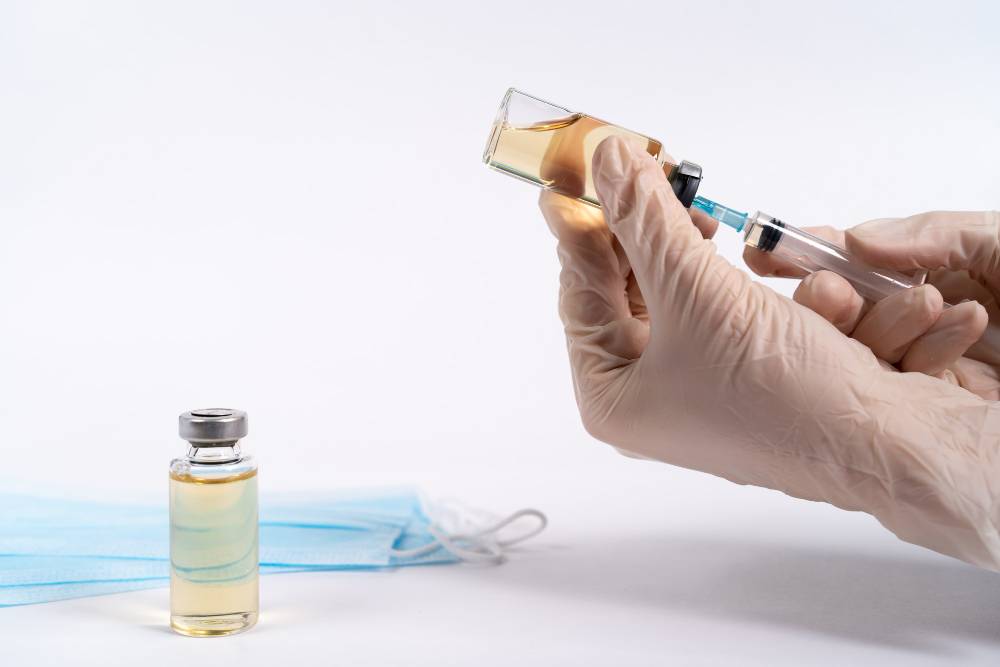
Longevity injections in the AHC program are three provider-reviewed compounded options: NAD+, sermorelin, and glutathione. Each is a compounded medication, not FDA-approved, prescribed only after an online intake and provider review. This guide explains what each one is, how the program works, and what the human evidence does and does not yet show.
Compounded medications are prepared by state-licensed compounding pharmacies. NAD+, sermorelin, and glutathione are compounded medications, are not FDA-approved, and have not been reviewed by the FDA for safety, efficacy, or quality.
You have seen the promises. More energy, slower aging, a sharper mind, all from a shot. Longevity injections are everywhere right now, and most of the pages selling them skip the part that matters most: what the human evidence actually shows. This guide does the opposite. It walks through the three compounded longevity injections in the AHC program, NAD+, sermorelin, and glutathione, and for each one it separates the marketing claim from what studies in people have and have not proven.
Key takeaways
- The AHC program covers three longevity injections: NAD+, sermorelin, and glutathione.
- All three are compounded medications, and none is FDA-approved for anti-aging.
- Human evidence for longevity injectables is still early. AHC makes no anti-aging or cure claims.
- A licensed provider reviews every request, and baseline labs come first.
- NAD+ compounded with a GLP-1 medication requires a consultation and a $250 compounding fee.
Table of Contents
What are longevity injections?
Longevity injections are compounded medications given by injection and marketed to support healthy aging, energy, and recovery. In the AHC program, that means three options: NAD+, sermorelin, and glutathione. Each is a compounded medication. None is FDA-approved for anti-aging, and a licensed provider reviews every request before anything ships.
Here is the honest version, compound by compound.
| Compound | Claimed benefit | What the evidence shows |
| NAD+ | More energy, cellular repair, anti-aging | Human evidence is early. Animal studies show some healthspan gains, but not a longer lifespan. No human trial shows an anti-aging effect from injections. |
| Sermorelin | Muscle, sleep, recovery, feeling younger | A growth-hormone-releasing peptide studied mostly through broader hormone research. Modest body-composition shifts at best, and no proven anti-aging benefit in healthy adults. |
| Glutathione | Skin brightening, detox, antioxidant support | The body’s main antioxidant, but injectable human evidence is weak and inconsistent. Skin-lightening trials are small and short. |
One more honest point. For NAD+, the strongest human evidence is for oral precursors taken by mouth, not for injections or IV drips. Route and delivery are their own question, and we cover them in our guide to NAD+ injections versus IV infusions.
NAD+ injections: what the research shows
NAD+ stands for nicotinamide adenine dinucleotide. It is a coenzyme found in every cell, and your body uses it to turn food into energy and to run repair processes. NAD+ levels fall as people age, which is why NAD+ became a longevity target in the first place.
Here is what the research supports, and where it stops. The National Institute on Aging funded a study in aging mice given a NAD+ precursor. The mice showed real gains in healthspan, including better glucose metabolism, less fatty liver, and improved physical performance for their age. They did not live any longer. Healthspan improved. Lifespan did not.
A 2026 PRISMA-guided systematic review in Ageing Research Reviews pooled the preclinical and clinical evidence on NAD+ supplementation for aging. The pattern it describes is consistent. Animal and laboratory results look promising, while human clinical evidence stays thinner than the marketing suggests. No human trial has shown that injectable NAD+ reverses aging.
The clearest human signal so far is not from an injection at all. In a 2021 study, an oral NAD+ precursor improved muscle insulin sensitivity in prediabetic women over about ten weeks. That is a real, measured result. It is also a single metabolic marker, not proof of a longer or younger life, and it came from a pill rather than a shot. That kind of distinction is exactly what the hype pages skip.
NAD+ is not FDA-approved for any medical use, and compounded NAD+ is not an FDA-approved drug product. Some people report more energy or clearer focus. That is worth noting, and it is not the same as a proven anti-aging effect. A provider sets realistic expectations before you begin.
Sermorelin: benefits, evidence, and limits
Sermorelin is a synthetic peptide that copies part of growth-hormone-releasing hormone, the signal your brain uses to tell the pituitary gland to make growth hormone. So sermorelin does not add growth hormone to your body. Sermorelin nudges your own pituitary to release more of its own.
That is the real difference from HGH. Injected human growth hormone replaces the hormone directly and bypasses the body’s natural feedback brake. Sermorelin works within that feedback system, which is why supporters describe it as the gentler approach. For a fuller breakdown, see our explainer on what sermorelin is.
The evidence is more modest than the marketing. Most of it comes from broader growth-hormone research rather than sermorelin-only trials. A 2007 review in Annals of Internal Medicine looked at growth hormone in healthy older adults and found small body-composition shifts, roughly a couple of kilograms less fat and more lean mass, with no measurable gain in strength or fitness. Claims about deeper sleep, faster recovery, and younger skin are mostly anecdotal and have not been confirmed in sermorelin-specific trials.
Regulatory status matters here. A sermorelin product called Geref was FDA-approved in 1997, but only to diagnose and treat growth hormone deficiency in children. The manufacturer later withdrew it for commercial reasons. Today’s sermorelin for adults is compounded and used off-label, and sermorelin is not an FDA-approved finished drug. Anyone with active cancer, or who is pregnant or breastfeeding, should not use it, and a provider screens for those reasons first.
Glutathione injections: antioxidant claims vs evidence
Glutathione is an antioxidant your cells make on their own. Glutathione helps neutralize the reactive molecules that build up through normal metabolism, which is why it gets called the body’s master antioxidant. That part is real biochemistry. The injectable claims are where the honesty gap opens.
Glutathione injections are marketed mostly for skin brightening, detox, and anti-aging. The human evidence is weak and inconsistent. A 2017 randomized trial reported only limited skin-lightening effects and called for longer study. A 2025 review of glutathione for skin lightening reached a similar place: small, short trials, and results that lean on anecdote and marketing more than controlled data. To understand the compound itself, see our overview of what glutathione is.
Safety deserves a plain word too. Injectable glutathione is not FDA-approved, and the FDA has advised against marketing it for unproven uses like skin lightening. Reported risks include allergic reactions, rashes, and, with prolonged use, possible effects on the kidneys or liver. Those risks are one reason a provider, monitoring, and baseline labs matter more than a quick walk-in shot.
Are longevity injections right for you?
No one should start a longevity injection because a website promised a younger version of them. The honest starting point is a provider who reviews your history, your current medications, and your goals, and who orders baseline labs first. Labs give you a real before-picture instead of a guess.
Baseline labs usually include a metabolic panel plus markers your provider chooses based on your history. They matter for two reasons. First, they can flag a reason not to proceed. Second, they give you something concrete to compare against later, instead of judging progress by how you feel on a given morning.
Longevity injections are not for everyone. People who are pregnant or breastfeeding, people with active cancer, and people with certain kidney, liver, or hormone conditions are usually told to skip them or wait. A licensed provider screens for those situations during the intake, and can decline a request. That is the system working, not a hurdle.
This is also where a supervised telehealth program differs from a walk-in medspa. A medspa may hand you a drip on the day you ask. A physician-supervised program reviews you first, sets realistic expectations, and follows up. For a category this full of hype, the slower path is the safer one.
What longevity injections cost and what to expect
Start with the two numbers we can state plainly. A provider consultation at AHC is $29.99. NAD+ compounded with a GLP-1 medication is $250 for all doses, and it requires a consultation. You can see what that consultation reviews in our guide to NAD+ with a GLP-1 medication.
Plan pricing for each option shows in your dashboard after a provider reviews your intake, so you see your real cost before you commit to anything. What no one can promise you is a specific result on a specific date. Results vary by individual and depend on your health, your consistency, and the guidance of your provider. Any page guaranteeing you an outcome is selling, not informing.
How the AHC longevity program works
The AHC longevity program runs the same careful way as the rest of the platform. You complete an intake for the specific medication you are interested in. You pay online. A licensed provider reviews your request and either approves it or declines it. If approved, your dosage instructions come to you by email, and your medication ships cold-chain to your door. There is no clinic visit.
Because the review happens by telehealth, you get physician-supervised care without a clinic visit, and the same provider oversight applies to a follow-up question weeks later. That structure is the point. It keeps a compounded product inside a supervised system instead of turning it into a one-time transaction at a counter.
Every compound in the program is prepared by a state-licensed compounding pharmacy. NAD+, sermorelin, and glutathione are compounded medications, and none is FDA-approved for anti-aging. If you are deciding whether any of this fits you, the honest first step is a provider review, not a purchase.
Frequently asked questions
Do NAD+ injections really work?
It depends on what you mean by work. People often report more energy or sharper focus, but human clinical evidence for injectable NAD+ is still early, and no human trial has shown it reverses aging. The strongest human data is for oral NAD+ precursors, not injections. A provider can set realistic expectations before you start.
What is the downside of taking NAD+?
NAD+ is not FDA-approved, so quality depends on the compounding pharmacy and the oversight around it. Injections and infusions can cause flushing, nausea, or discomfort, and safety data in humans is limited. That is why baseline labs and provider review come first.
Is NAD+ FDA-approved?
No. NAD+ is not FDA-approved for any medical use, and compounded NAD+ is not an FDA-approved drug product. The same is true for compounded sermorelin and glutathione. None of the three longevity injections is FDA-approved for anti-aging.
How much do NAD+ injections cost?
At AHC, a provider consultation is $29.99. NAD+ compounded with a GLP-1 medication is $250 for all doses and requires a consultation. Plan pricing for other options appears in your dashboard after a provider reviews your intake.
What are the benefits of sermorelin therapy?
Sermorelin is used to encourage the body’s own growth hormone, and supporters point to body composition, sleep, and recovery. The evidence is modest and comes mostly from broader growth-hormone research, not sermorelin-only trials. Benefits are not guaranteed, and a provider decides whether sermorelin is appropriate.
Is sermorelin the same as HGH?
No. HGH replaces growth hormone directly and bypasses the body’s feedback controls. Sermorelin signals your own pituitary to make growth hormone within that natural system. They are different tools with different risk profiles.
What are the benefits and side effects of glutathione injections?
Glutathione is the body’s main antioxidant, and injections are marketed for skin brightening and detox, though human evidence for those uses is weak. Reported side effects include allergic reactions and rashes, with possible kidney or liver effects during prolonged use. Injectable glutathione is not FDA-approved, and provider monitoring matters.
Can you combine NAD+ with a GLP-1?
Yes, NAD+ can be compounded with a GLP-1 medication at AHC, and that option requires a provider consultation. The price is $250 for all doses. Our guide to NAD+ with a GLP-1 medication explains what the consultation reviews.
Injections vs IV: which is better?
Neither is universally better. Injections are convenient and done at home, while IV infusions deliver a larger volume in a clinical setting over time. Our guide to NAD+ injections versus IV infusions compares route, setting, and what to expect.
Who should not use longevity injections?
People who are pregnant or breastfeeding, people with active cancer, and people with certain kidney, liver, or hormone conditions are usually advised to skip them. A licensed provider screens for these during the intake and can decline a request. When in doubt, ask your provider first.
Are longevity injections covered by insurance?
Generally no. Compounded longevity injections used for wellness are typically not covered by insurance. At AHC, pricing is shown up front, with a $29.99 consultation and plan pricing in your dashboard, so there are no surprise charges.
Start with an honest provider review, not a promise
You should be able to ask what the evidence really shows and get a straight answer. That is the whole idea here. A licensed provider reviews your health and goals, orders baseline labs, and tells you honestly whether a longevity injection makes sense for you, with no anti-aging guarantees attached. Complete a free evaluation to start that conversation and see what fits.
Disclaimer
This article is for general education and is not medical advice. NAD+, sermorelin, and glutathione are compounded medications, are not FDA-approved, and have not been reviewed by the FDA for safety, efficacy, or quality. Human evidence for longevity injectables is still early, and no anti-aging or cure outcomes are implied or guaranteed. Results vary by individual and depend on your health, adherence, and clinical guidance. A licensed provider reviews every request and may decline it. Contact AHC support at [email protected] with any questions about your treatment.