
Blog
NAD+ With GLP-1 Medication: What the Consultation Covers

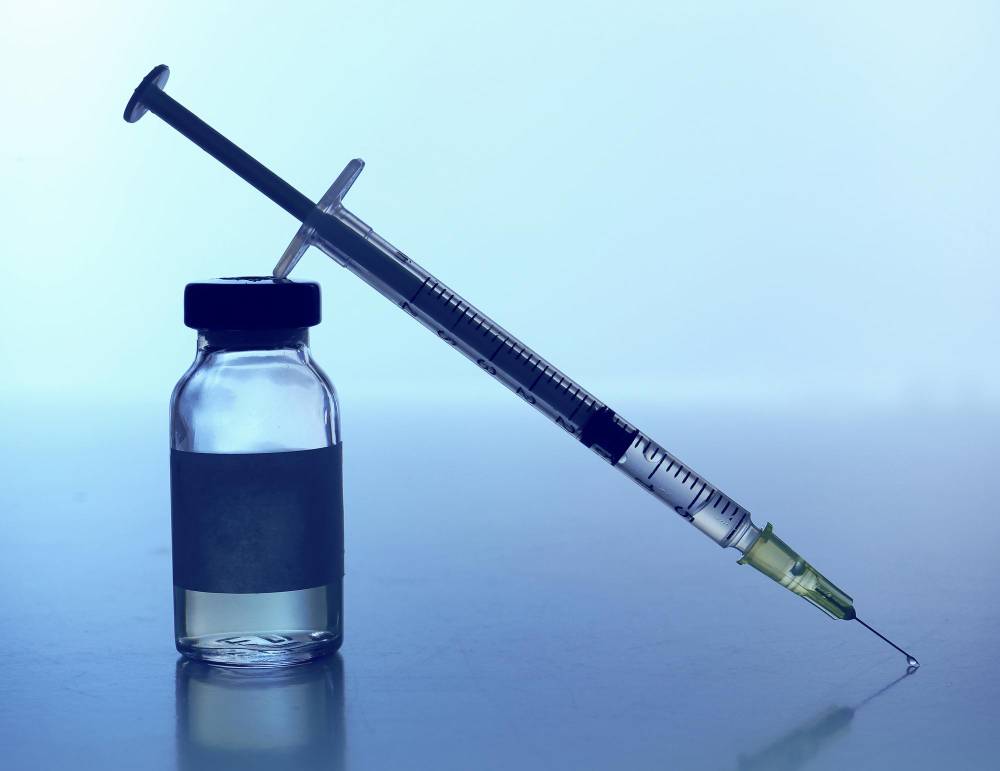
NAD+ with GLP-1 medication is available at AHC after a provider consultation, and the compounding fee is $250 for all doses. The consultation is where a licensed provider reviews your history and your current GLP-1 program, decides whether combining is appropriate, and sets how it works. A provider reviews every request and retains full discretion.
| Important: Compounded medications are prepared by state-licensed compounding pharmacies. They are not FDA-approved and have not been reviewed by the FDA for safety, efficacy, or quality. |
Table of Contents
Can you take NAD+ with a GLP-1 medication?
Whether you can take NAD+ with a GLP-1 medication is a clinical decision made by a licensed provider, based on your medical history and your current treatment. At AHC, this combination is available after a provider consultation. It is not available on request, and the provider retains full discretion to approve or decline.
This is the honest answer to a question people want a simple yes or no for. There is no universal answer, because the right call depends on you. Your existing conditions, your current GLP-1 program, and your other medications all factor into the assessment.
That is exactly why the consultation exists. It replaces a guess with a review. If you are already exploring the pairing, our guide to pairing NAD+ with tirzepatide covers what the combination is meant to support. Tirzepatide is the GLP-1 most people ask to pair it with, though the same consultation applies to other GLP-1 options.
What do people hope to get from combining NAD+ with a GLP-1?
People combine NAD+ with a GLP-1 hoping to support energy and recovery while they pursue weight loss. The GLP-1 side targets appetite-regulating pathways, and NAD+ is a coenzyme central to how cells produce energy. The idea is to pair a weight-focused treatment with a longevity-focused one in a single routine.
It is worth staying honest about the evidence. NIH researchers describe NAD+ in aging biology as holding real potential alongside many unknowns, so the pairing is an optimization choice rather than a proven protocol. Results vary by individual and depend on adherence, clinical guidance, and lifestyle factors.
That honesty is part of the point of the consultation. A provider can tell you what is reasonable to expect for your situation, rather than promising an outcome you might not see.
Why is a consultation required for NAD+ with GLP-1 medication?
A consultation is required because combining NAD+ with a GLP-1 medication is a bigger clinical decision than either treatment alone. The provider has to look at both together, confirm the combination suits your history, and set a structure that makes sense for you. That review cannot happen through a standard intake checkbox.
Two treatments interacting is more to weigh than one. A GLP-1 medication acts on appetite-regulating pathways, and NAD+ is a coenzyme involved in cellular energy metabolism, which the National Institutes of Health links to how cells produce energy. Bringing them together is a decision a provider should make deliberately, not one a form should make automatically.
The consultation is the safeguard around that decision. It is the same principle behind every AHC order, applied to a combination that deserves a closer look.
Is combining NAD+ and a GLP-1 right for everyone?
Combining NAD+ and a GLP-1 is not right for everyone, which is why a provider decides rather than a form. Your medical history, current medications, and any listed contraindications all factor in. A licensed provider reviews the full picture and retains full discretion to approve or decline the combination.
Some people are better suited to one treatment at a time, and some are not candidates for the combination at all. That is a clinical judgment, not a preference. The consultation is where that judgment happens, with your specific history in front of the provider.
If you experience severe symptoms on any treatment, contact AHC support or seek medical care. For questions about your dose or schedule, contact AHC support rather than adjusting anything yourself.
What does the consultation cover?
The consultation covers whether NAD+ with a GLP-1 medication is appropriate for you and how it would work. A licensed provider reviews your history and your current program, discusses what to expect, and answers your questions. The specifics are set by the provider, not chosen from a menu.
In practice, a consultation of this kind tends to cover a few things:
- Your medical history, including conditions that affect whether the combination is suitable.
- Your current GLP-1 program, so the provider understands what you are already on.
- Your other medications, to check for anything that does not combine safely.
- Your goals, so the plan matches what you are trying to support.
- What to expect, framed realistically, since results vary by individual.
- Your questions, which is often the most useful part for you.
None of this creates a doctor-patient relationship on its own. Clinical services are provided by independently contracted, U.S.-licensed clinicians. The exact content of a consultation can vary, so treat this as the shape of the conversation rather than a fixed script.
What does NAD+ with GLP-1 medication cost?
NAD+ compounding with a GLP-1 medication is available after a provider consultation, and the compounding fee is $250 for all doses. That figure covers the compounding of the combination regardless of dose. Separately, provider consultations are available for $29.99 if you want to speak directly with a provider.
Keeping these two things clear helps. The $250 is the compounding fee for the combined preparation. The $29.99 is what a provider consultation costs if you book one. Your specific plan pricing appears in your dashboard, and AHC does not add membership fees.
There are no dose-escalation markups on the combination, which is the point of a flat compounding fee. You are not charged more because your dose changes over time. For how NAD+ compares to a GLP-1 on its own, our comparison of NAD+ and tirzepatide for weight loss puts the two side by side.
How is NAD+ combined with a GLP-1?
When approved, NAD+ is compounded as part of your treatment by state-licensed pharmacy partners, and your provider sets how it is structured alongside your GLP-1 medication. AHC’s NAD+ follows a loading phase and then a maintenance phase, and the specific amounts and timing come in the instructions AHC emails you after approval.
The structure is set for you, not by you. That matters most with a combination, where the timing of each part is a clinical decision. Our guide to the NAD+ loading phase and maintenance phase explains how the NAD+ side is organized.
Do not adjust anything on your own. Early doses are intentionally mild, and most people notice changes as they progress, so patience with the structure matters more than pushing it. If you have a question about your schedule or your dose, contact AHC support, and AHC’s medical officer reviews every request. Dose changes are never automatic.
How should you prepare for the consultation?
Prepare for the consultation by having your health information ready and your questions written down. The more accurately you can describe your history and your current program, the more useful the provider’s assessment will be. A few minutes of preparation makes the conversation work better for you.
Before your consultation, it helps to gather:
- Your current GLP-1 details, including which medication and how long you have been on it.
- A list of your other medications and supplements, so nothing is missed.
- Your relevant medical history, including any conditions or past reactions.
- Your goals, so the provider understands what you want to support.
- Your questions, written down before you start so you do not forget them.
If you are still deciding whether the pairing is for you, reading first helps. Our overview of NAD+ and tirzepatide for energy and recovery covers what people are usually trying to achieve with the combination. If you are newer to the GLP-1 side, our explainer on what tirzepatide is and how it works is a useful starting point before you book, so the consultation can focus on the combination rather than the basics.
How does the AHC process work?
Every AHC medication has its own intake form. You complete the medical intake for the treatment you are considering and pay online when you submit it. An AHC-affiliated licensed provider then reviews your order and retains full discretion to approve or decline treatment based on your medical history and intake responses. If approved, dosage instructions are sent to you by email, and your medication ships by cold chain express shipping. Orders are typically processed within 1 to 2 business days, with an average delivery window of 4 to 12 business days. AHC ships within the United States only.
For the NAD+ and GLP-1 combination specifically, the consultation sits within this process. The provider review still applies, payment does not guarantee approval, and the combination is only prepared after a provider approves it.
Frequently asked questions
Can I add NAD+ to my existing GLP-1 program?
NAD+ with a GLP-1 medication is available after a provider consultation. A licensed provider reviews your history and your current program and decides whether the combination is appropriate. It is not available on request, and the provider retains full discretion.
What does NAD+ with GLP-1 medication cost?
The compounding fee is $250 for all doses. Provider consultations are available separately for $29.99 if you want to speak directly with a provider. Your specific plan pricing appears in your dashboard, and there are no membership fees.
Why do I need a consultation for the combination?
Combining two treatments is a bigger clinical decision than either alone. The consultation lets a provider weigh your history, your current GLP-1 program, and your other medications together, and set a structure that suits you rather than approving a combination automatically.
Is NAD+ with a GLP-1 FDA-approved?
No. NAD+ and AHC’s compounded GLP-1 medications are compounded by state-licensed pharmacy partners. They are not FDA-approved and have not been reviewed by the FDA for safety, efficacy, or quality.
Does the consultation mean I will get the combination?
No. A consultation is a clinical conversation, not an approval. The provider retains full discretion to approve or decline based on your medical history and intake responses. Payment does not guarantee approval.
How is the NAD+ dose decided?
Your provider sets the structure, and AHC’s NAD+ follows a loading phase and then a maintenance phase. The specific amounts and timing arrive in the instructions AHC emails you after approval. Contact AHC support with any question rather than adjusting anything yourself.
Can I take NAD+ on its own instead?
Yes. NAD+ is available as part of AHC’s longevity program on its own, without a GLP-1. The combination is a separate option that carries its own consultation and the $250 compounding fee.
What should I have ready for the consultation?
Have your current GLP-1 details, a list of your other medications and supplements, your relevant medical history, your goals, and your questions written down. Accurate information makes the provider’s assessment more useful.
Disclaimer
Compounded medications are prepared by state-licensed compounding pharmacies. They are not FDA-approved and have not been reviewed by the FDA for safety, efficacy, or quality. Results vary by individual and depend on adherence, clinical guidance, and lifestyle factors. This article is for general information and is not medical advice. Contact AHC support at [email protected] with questions about your treatment.