
Blog
The Complete Guide to Healthy Meals for Weight Loss on GLP-1 Medications


What Are the Best Healthy Meals for Weight Loss on a GLP-1?
The best healthy meals for weight loss on a GLP-1 medication are protein-forward, portioned for a smaller appetite, and built around the same food ratios doctors already recommend, just less of them. Choosing the right healthy meals for weight loss here comes down to a 4 to 5 ounce protein source, a cup of vegetables, and a small serving of a complex carbohydrate for most meals. What changes is not what is on the plate. It is how much of it you actually need.
Key takeaways
- Meal composition does not need to change on a GLP-1. Portion size does, and protein needs to stay high even as everything else shrinks.
- The clinical plate method still applies, just scaled to a smaller total plate rather than replaced with different food rules.
- Protein comes first at every meal here, not as one tip among many, because appetite suppression makes it the easiest target to miss without noticing.
- Meal prep matters more on a GLP-1, not less, since day-of appetite is genuinely unpredictable in a way it was not before.
At a glance
| 1.2-1.5g protein per kilogram of body weight, the target behind every meal here | ~50% of a GLP-1 plate is protein by the adapted plate method, versus a smaller share on a standard plate | 4-5 oz a typical protein portion once appetite has adjusted to treatment | 3-4 smaller meals or meals-plus-snacks a day tends to fit a suppressed appetite better than 3 large ones |
What’s in this guide
- Part 1: Why meals look different, and the plate method adapted for it
- Part 2: A full day of real meals, and the protein math behind them
- Part 3: Making it practical: budget, prep, and the mistakes that undo progress
Part 1: Why Meals Look Different on a GLP-1
Why Meals Look Different on a GLP-1 Medication
Semaglutide and tirzepatide slow how quickly food leaves your stomach and turn down appetite signals directly, which is the entire mechanism behind the weight loss. The practical result is that a plate that felt normal before treatment can feel like too much now, sometimes dramatically so within the first few weeks of a new dose. This is not a reason to eat less thoughtfully. It is a reason to make every bite count more, since there are fewer of them.
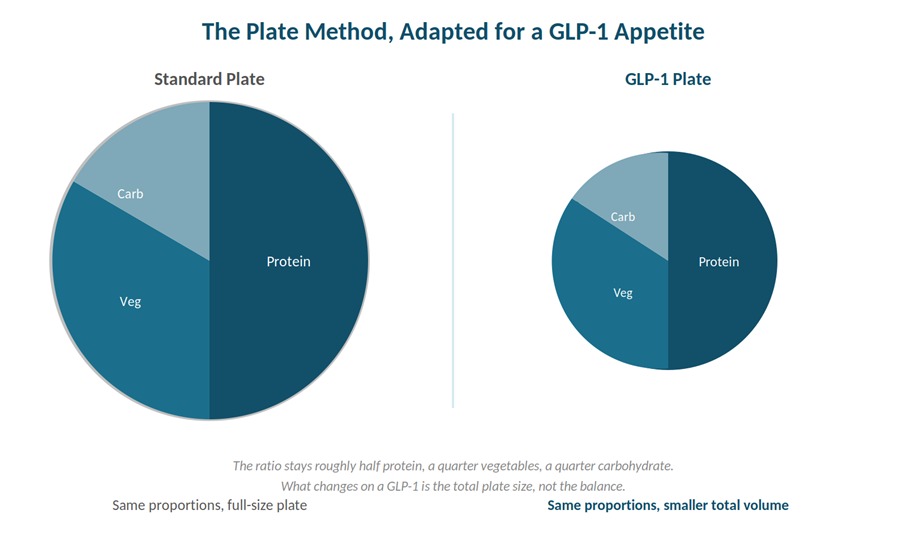
The Plate Method, Adapted for a Smaller Appetite
The plate method is a real clinical tool, the same visual framework used in diabetes education programs, not a diet trend. Roughly half the plate is protein, a quarter is vegetables, and a quarter is a complex carbohydrate, with a small amount of healthy fat. Nothing about that ratio needs to change on a GLP-1. What changes is the size of the plate itself.
Protein gets priority treatment specifically, since it is the macronutrient most likely to fall short once total volume drops, and the one most directly tied to preserving muscle during rapid weight loss. When in doubt about what to add to a smaller meal, protein is almost always the right answer over more vegetables or more carbohydrate.
Part 2: A Full Day of Meals
A Full Day of GLP-1 Meals
These are real examples of healthy meals for weight loss on a GLP-1, not a generic food list. Every meal here targets 25 to 35 grams of protein.
Breakfast (about 280 calories, 28g protein)
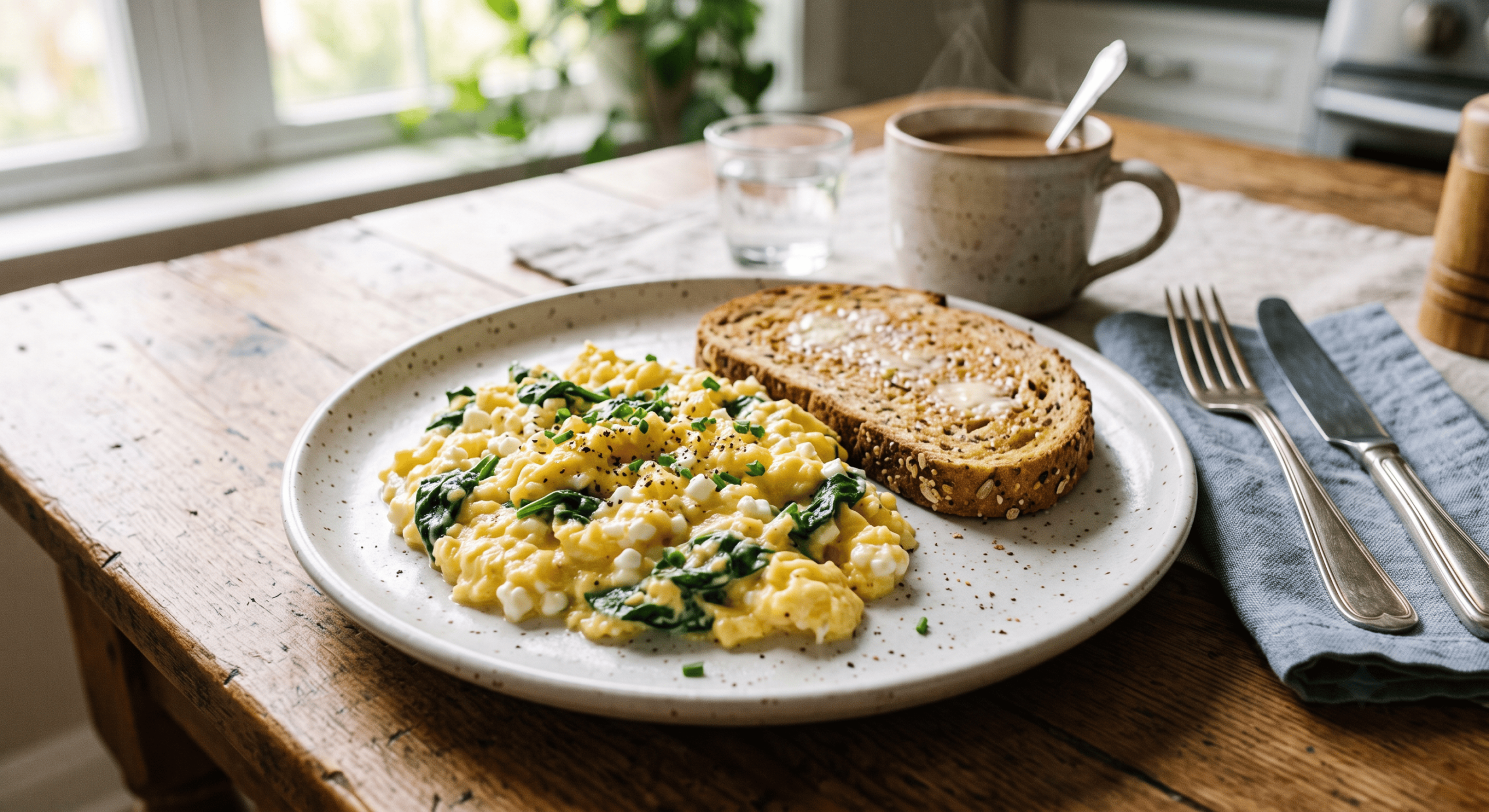
- 2 whole eggs, scrambled with 1/4 cup cottage cheese mixed in
- A small handful of spinach, wilted into the eggs
- Half a slice of whole grain toast
Lunch (about 350 calories, 35g protein)
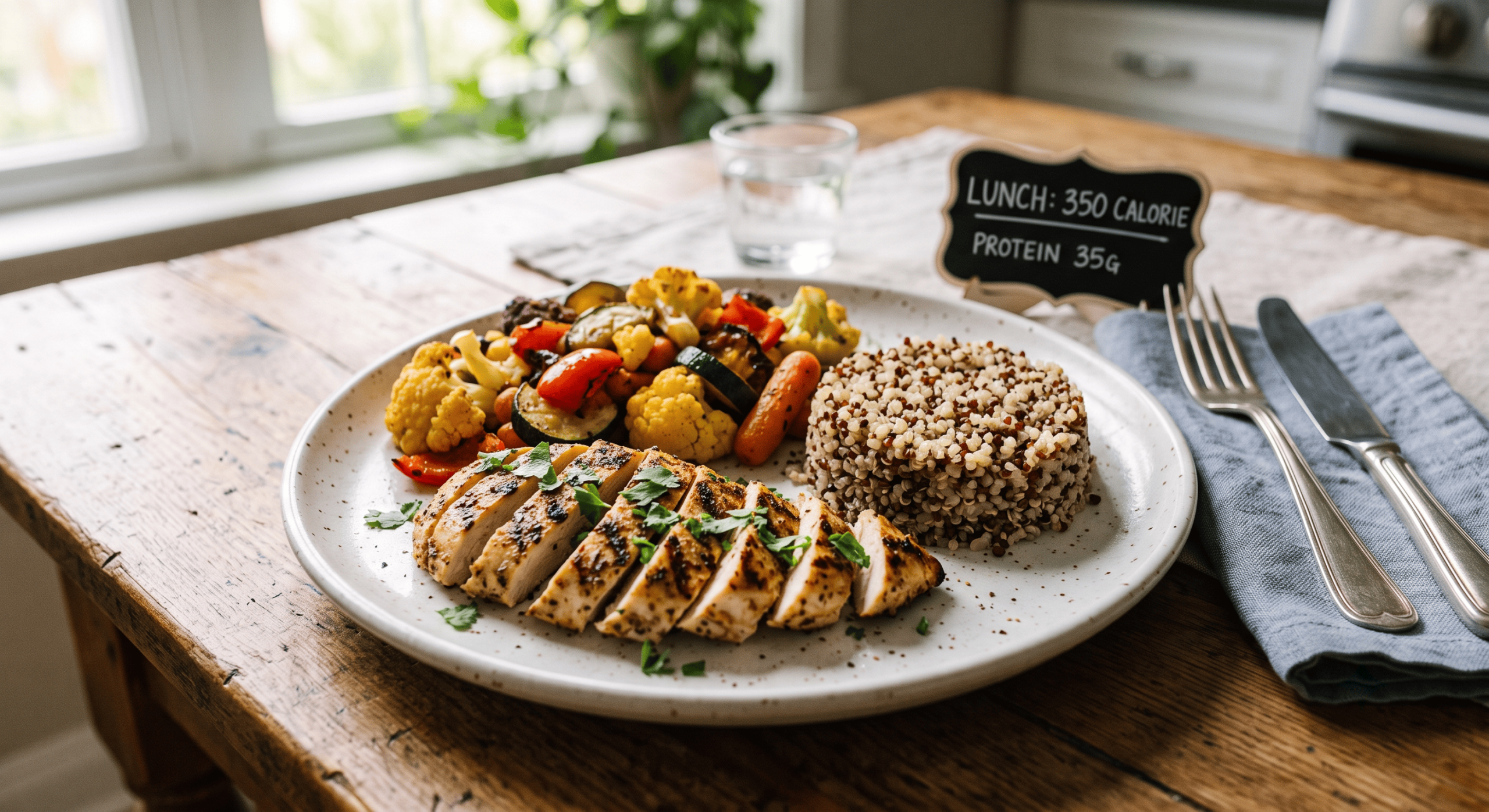
- 4 oz grilled chicken breast
- 1 cup roasted mixed vegetables
- 1/3 cup cooked quinoa
Dinner (about 380 calories, 32g protein)
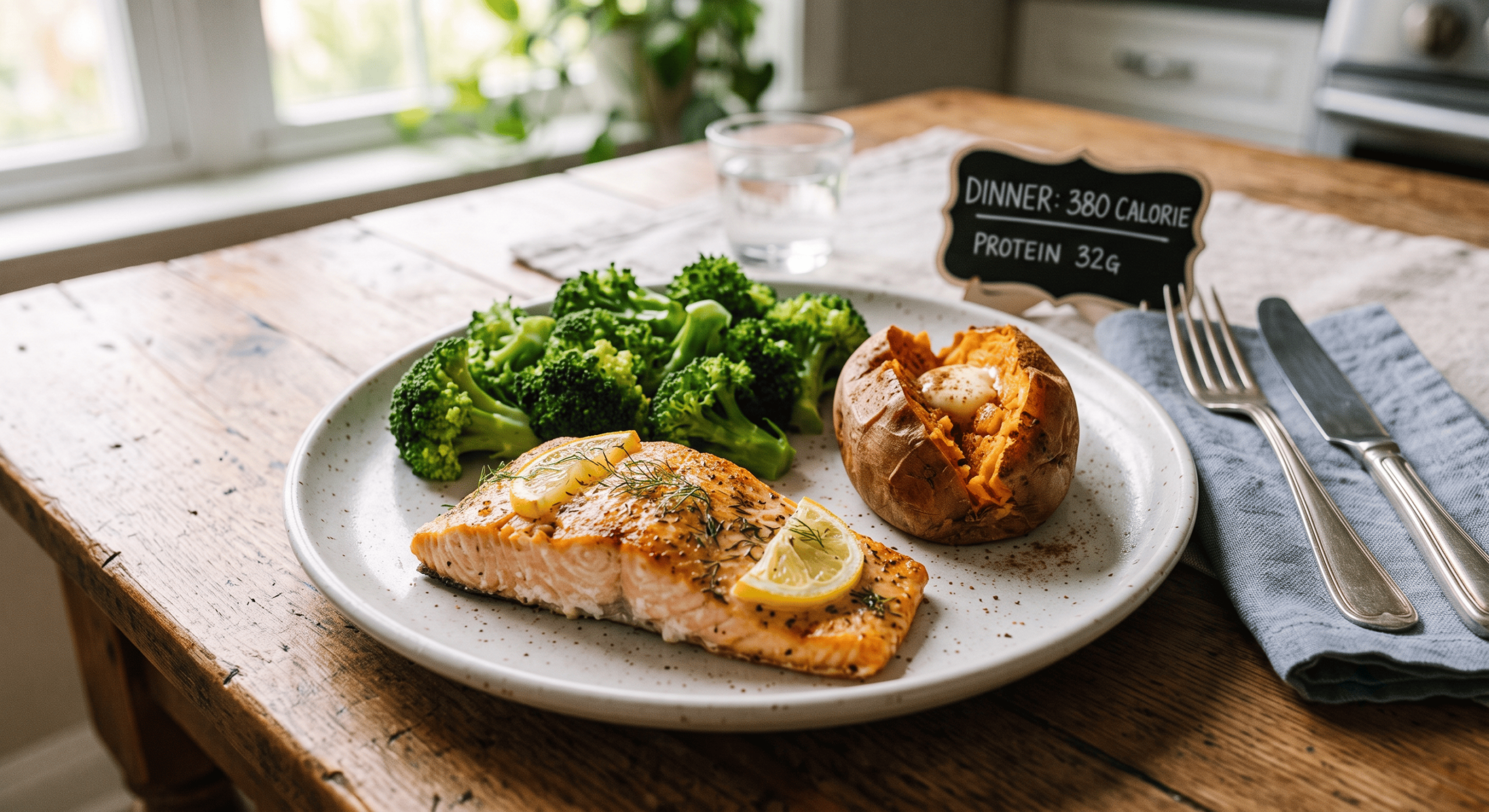
- 4 oz baked salmon
- A large serving of steamed broccoli
- A small baked sweet potato
Snack, if needed (about 150 calories, 15g protein)
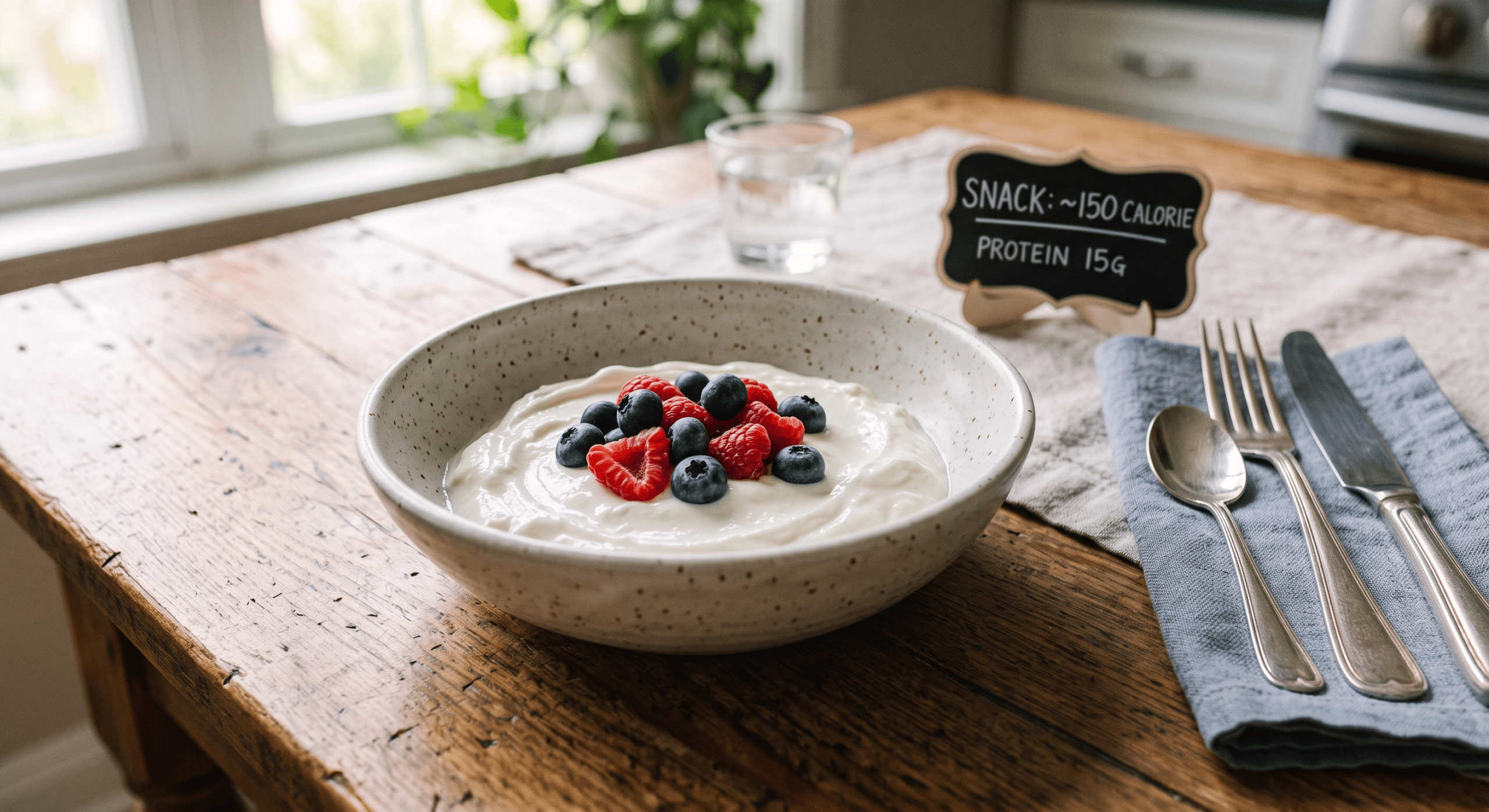
- 3/4 cup plain Greek yogurt with a small handful of berries
For more snack options in this same protein range, see the Healthy Snacks guide linked at the end of this article.
Protein Targets and Why They Drive Every Meal Here
Weight lost on any significant calorie reduction, GLP-1 medications included, comes from a mix of fat and lean muscle, and the muscle share can be meaningful without deliberate effort to prevent it. A target of 1.2 to 1.5 grams of protein per kilogram of body weight daily, spread across meals rather than loaded into one, is the single most effective food-level defense against that.
For the full explanation and a calculator for your specific target, see Muscle Loss on Tirzepatide and the GLP-1 protein calculator.
Part 3: Making It Practical
Budget-Friendly Meals That Still Hit Protein Targets
Protein-forward eating does not require an expensive grocery list.
- Eggs and canned tuna remain among the cheapest protein sources per gram available anywhere.
- Cottage cheese and plain Greek yogurt cost less than most flavored, marketed “protein” products and deliver more protein per dollar.
- Frozen vegetables are nutritionally comparable to fresh and cost meaningfully less, with none of the waste from produce that goes bad before a smaller appetite gets to it.
- Buying chicken thighs instead of breasts and dried beans instead of canned both cut cost without cutting protein.
Meal Prep for an Unpredictable Appetite
Meal prep matters more here than in typical dieting, for a specific reason: you genuinely cannot always predict how hungry you will be on a given day, especially in the first weeks after a dose change. Having a protein-forward meal already portioned and ready removes the decision entirely on a low-appetite day, when cooking from scratch is the last thing that sounds appealing.
- Cook proteins in bulk once or twice a week, then portion into single-meal containers rather than one large batch.
- Keep portions smaller than you think you need. It is easier to add a bit more than to face a container that already feels like too much.
- Freeze half of any batch immediately. A future low-appetite day is easier to handle with something already made than with a recipe to start from scratch.
Common Meal Mistakes on a GLP-1
- Not eating enough protein. The most common and most consequential mistake, since low appetite makes it easy to eat “something” without checking whether it hits your target.
- Skipping meals entirely because nothing sounds appealing. This tends to backfire by worsening fatigue rather than solving anything, and often leads to a larger, less controlled meal later.
- Eating too fast. A slowed digestive system needs more time to signal fullness than it used to; eating at the old pace is a common, avoidable cause of nausea.
- Treating every meal as a full-size portion out of habit, then feeling uncomfortably full or nauseated rather than adjusting the amount going in.
Standard Plate vs. GLP-1-Adjusted Plate
| Element | Standard plate | GLP-1-adjusted plate |
| Protein | 4-6 oz | 4-5 oz, prioritized first |
| Vegetables | 1-1.5 cups | 3/4-1 cup |
| Complex carbohydrate | 1/2-1 cup | 1/3-1/2 cup |
| Total meal size | Full plate | Roughly two-thirds the volume |
Frequently Asked Questions
What should I eat for weight loss on a GLP-1 medication?
Protein-forward meals following the plate method: roughly half protein, a quarter vegetables, a quarter complex carbohydrate, in a smaller total portion than before treatment.
How much protein should I eat per meal on semaglutide or tirzepatide?
25 to 35 grams per meal is a reasonable target for most people, supporting a daily total of 1.2 to 1.5 grams per kilogram of body weight.
Do I need to eat 3 meals or more smaller meals on a GLP-1?
Either can work. Some people do better with 3 smaller meals, others with 3 meals plus one or two small snacks. Let your actual appetite guide the structure rather than a fixed rule.
What foods should I avoid on a GLP-1 medication?
Nothing is strictly off-limits, but very greasy, fried, or heavily processed food is the most common trigger for nausea, especially in the first weeks after a dose change.
How do I meal prep for unpredictable appetite?
Cook proteins in bulk, portion into single-meal containers smaller than you think you need, and freeze extra for low-appetite days when cooking is unappealing.
Is it normal to eat less than before starting a GLP-1?
Yes. Reduced intake is the expected result of the medication, not a sign anything is wrong, as long as protein intake stays adequate.
What is the plate method?
A clinical portioning framework used in diabetes education: roughly half the plate is protein, a quarter vegetables, a quarter complex carbohydrate. It still applies on a GLP-1, just scaled to a smaller total plate.
Can I still eat carbohydrates on a GLP-1?
Yes. Complex carbohydrates remain part of a balanced plate; portion size is what typically decreases, not the food group itself.
How do I make sure I am getting enough protein if I am not very hungry?
Prioritize protein first on the plate before anything else, and consider a protein shake or Greek yogurt as an easy way to close a gap without needing a large volume of food.
What is a budget-friendly way to eat protein-forward meals?
Eggs, canned tuna, cottage cheese, plain Greek yogurt, chicken thighs, and dried beans all deliver strong protein per dollar without needing specialty “diet” products.
Get a Full Plan Built Around Your Own Treatment
These meals are a starting point. A free evaluation with a licensed AHC provider looks at your individual history to help determine whether compounded semaglutide or compounded tirzepatide is right for you.
Free AHC calculators and tools
See all AHC weight loss calculators
Related reading
Best Smoothie Recipes for Weight Loss on GLP-1 Medications
Healthy Snacks for Weight Loss on GLP-1 Medications
The Complete Guide to GLP-1 Side Effects
Medical disclaimer
This article is for informational purposes only and is not a substitute for professional medical or nutritional advice. Always talk with your provider or a registered dietitian about the eating plan that is right for you. Semaglutide and tirzepatide are prescription medications available only after an individual evaluation by a licensed provider.