
Blog
GLP-1 and Fertility: 6 Critical Facts Every Woman Must Know Before Conceiving

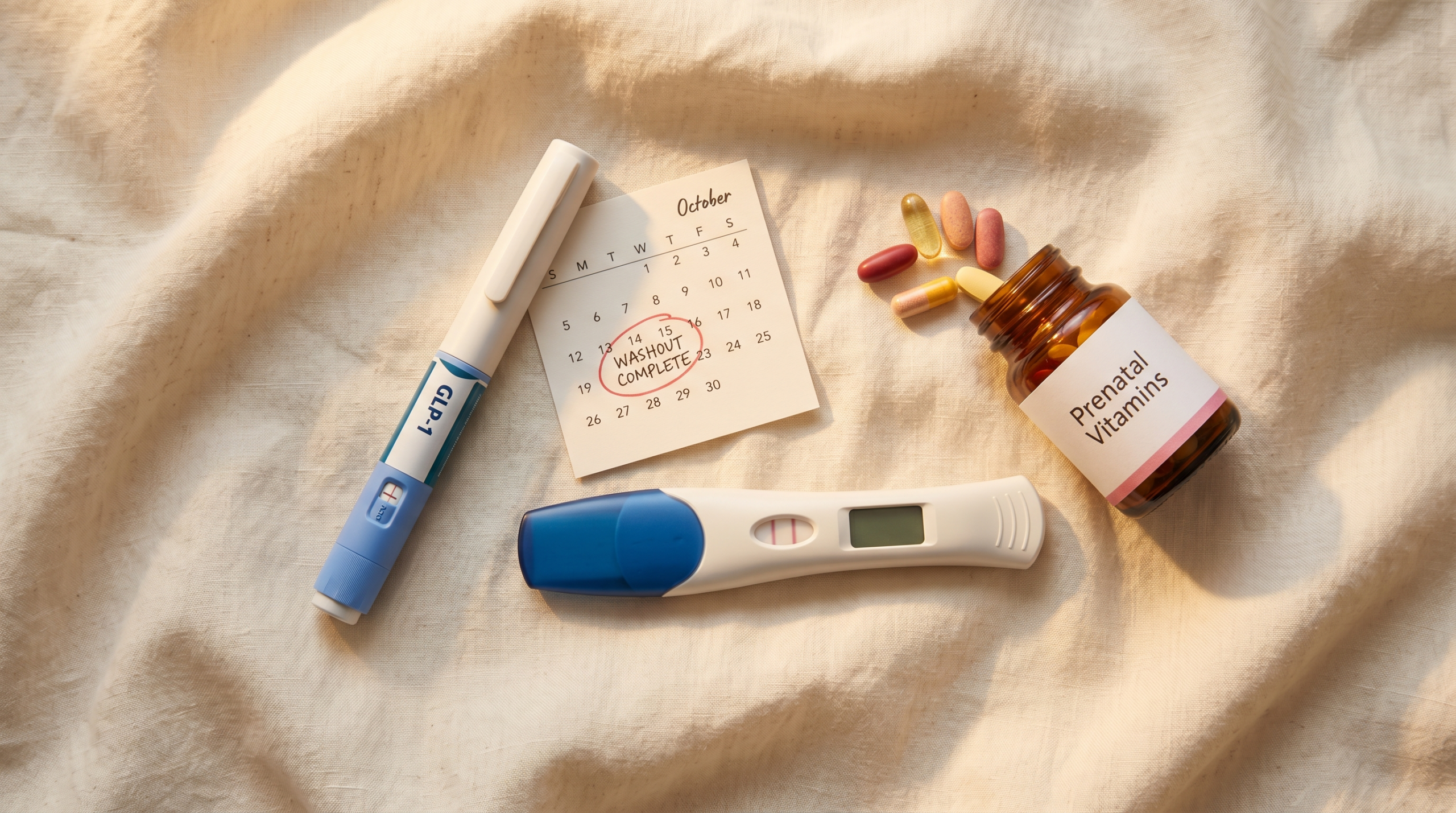
GLP-1 and fertility are increasingly connected as semaglutide and tirzepatide restore ovulation in women with obesity-related anovulation and PCOS. These medications are not fertility drugs, but they create the metabolic conditions for natural fertility to return. However, GLP-1 medications must be stopped at least 2 months before trying to conceive. They can also reduce oral contraceptive effectiveness, increasing unplanned pregnancy risk. The link between GLP-1 and fertility requires careful planning with both your prescriber and your OB-GYN.
The connection between GLP-1 and fertility is reshaping how women approach both weight loss and family planning. Women who struggled with infertility for years are getting pregnant after starting semaglutide. Fertility specialists are using GLP-1 medications as a first-line intervention for PCOS patients who failed to ovulate on clomiphene or letrozole alone.
If you are taking semaglutide or tirzepatide and pregnancy is anywhere in your future, understanding the relationship between GLP-1 and fertility is not optional. This guide covers how these medications affect your reproductive system, when to stop before conceiving, and how to protect both your weight loss results and your fertility goals.
How GLP-1 and Fertility Are Connected
GLP-1 medications do not directly increase fertility. They create the metabolic conditions that allow reproductive function to normalize:
| Mechanism | How It Affects Fertility | Most Relevant For |
| Weight loss | Losing 5-10% body weight can restore ovulation | All women with obesity-related anovulation |
| Insulin sensitivity | Reduced insulin resistance lowers ovarian androgen production | Women with PCOS or metabolic syndrome |
| Inflammation reduction | Lower inflammatory markers improve egg quality | Women with obesity, PCOS, or endometriosis |
| Hormonal rebalancing | Less body fat reduces excess estrogen. Better insulin reduces androgens. | Women with irregular or absent periods |
| Leptin signaling | Weight loss restores hypothalamic-pituitary-ovarian axis signaling | Women with hypothalamic amenorrhea |
For women with PCOS, the combined effect on weight loss and insulin sensitization can transform reproductive outcomes. Many women begin ovulating after 3-6 months of GLP-1 therapy. The connection between GLP-1 and fertility is strongest in this population. Start your evaluation with AHC.
The Ozempic Baby Phenomenon Explained
Unplanned pregnancies on GLP-1 medications happen for two reasons. First, women who were not ovulating due to obesity or PCOS begin ovulating again as they lose weight. If they were not using contraception because they believed they could not conceive, pregnancy occurs unexpectedly.
Second, GLP-1 medications slow gastric emptying, which can reduce absorption of oral contraceptive pills. The FDA updated product labeling in 2023 to address the GLP-1 and fertility interaction with oral birth control. Nausea and vomiting during dose escalation further reduce pill effectiveness.
If you are sexually active on GLP-1 therapy and not planning pregnancy, discuss non-oral contraception options (IUD, implant, injection) with your provider. These methods are not affected by gastric emptying changes.
When to Stop GLP-1 Before Trying to Conceive
| Medication | Washout Period | Half-Life | Rationale |
| Semaglutide | At least 2 months | ~7 days | 5 half-lives = ~35 days clearance. 2-month buffer for safety. |
| Tirzepatide | At least 2 months | ~5 days | Similar clearance. Same conservative recommendation. |
| Liraglutide | At least 2 months | ~13 hours | Shorter half-life but same 2-month recommendation. |
The two-month washout is conservative by design. Animal studies raised concerns about fetal growth restriction. The Novo Nordisk pregnancy registry (NCT04747418) is tracking outcomes in women exposed to semaglutide during early pregnancy. Interim 2025 reports show no clear safety signal, but data remains limited. Understanding GLP-1 and fertility timing is critical for safe family planning.
5-Step Transition Plan: GLP-1 to Pregnancy
- Coordinate providers: Your GLP-1 prescriber and OB-GYN or fertility specialist should communicate about timing.
- Stabilize weight first: Complete active weight loss and stabilize for 4-8 weeks before initiating washout.
- Optimize nutrition: Build protein, folate, iron, and vitamin D levels. Start prenatal vitamins 3+ months before trying.
- Plan for appetite return: Appetite returns within 2-4 weeks of stopping. Have a structured meal plan ready.
- Track your cycle: Monitor menstrual cycles after stopping. Most women see regular cycles within 1-2 months.
What If You Get Pregnant While on GLP-1?
If you discover pregnancy while taking semaglutide or tirzepatide:
- Stop the medication immediately. Do not take your next dose.
- Contact your prescriber and OB-GYN. Inform both about your GLP-1 use.
- Do not panic. Early exposure before a missed period is less concerning than continued use. Many women on GLP-1 have had healthy pregnancies.
- Request maternal-fetal medicine referral if recommended for additional monitoring.
GLP-1 and Fertility for Women with PCOS
PCOS is the most common cause of anovulatory infertility. GLP-1 medications address the metabolic root (insulin resistance) while producing weight loss that improves ovulation. Fertility specialists increasingly incorporate GLP-1 therapy into PCOS treatment before attempting conception. The GLP-1 and fertility connection is strongest in this group. Learn about PCOS and weight loss at AHC.
After Pregnancy: Returning to GLP-1
GLP-1 medications are not recommended during breastfeeding due to insufficient safety data. Most physicians recommend waiting until weaning before restarting. For postpartum weight management, see our postpartum weight loss medication guide.
Frequently Asked Questions About GLP-1 and Fertility
1. Can GLP-1 medications help me get pregnant?
Indirectly, yes. GLP-1 and fertility are connected through improved insulin resistance, reduced body weight, and restored ovulation. They are not fertility drugs but create the metabolic conditions for natural fertility to return.
2. Do I have to stop semaglutide before trying to conceive?
Yes. Current guidance recommends stopping at least 2 months before trying. The medication has not been studied in pregnant women. The GLP-1 and fertility relationship requires careful timing.
3. Can Ozempic cause birth defects?
No confirmed birth defect pattern exists in humans. Animal studies showed fetal growth restriction at high doses. The recommendation to stop before pregnancy is precautionary.
4. Will I regain weight when I stop GLP-1?
Appetite returns within 2-4 weeks. Some weight regain is possible. Stabilize your weight before the washout period and have a meal plan ready.
5. Can GLP-1 affect my birth control?
Yes. GLP-1 medications slow gastric emptying, reducing oral contraceptive absorption. The FDA updated labeling in 2023. Non-oral methods (IUD, implant) are not affected.
6. How soon can I get pregnant after stopping tirzepatide?
After a 2-month washout, you can begin trying. Most women resume regular cycles within 1-2 months of discontinuation.
7. Is it safe to do IVF while on GLP-1?
GLP-1 should be stopped before IVF. Some clinics use a period of GLP-1 therapy before the cycle to optimize metabolic health, then discontinue for washout before stimulation.
8. Can men take GLP-1 while partner is trying to conceive?
No evidence shows GLP-1 medications affect male fertility or sperm quality. Men can typically continue while their partner tries to conceive.
9. Should I take prenatal vitamins while on GLP-1?
Yes, if pregnancy is planned within 6-12 months. GLP-1 caloric restriction can create folate, iron, and B12 deficiencies that prenatals help prevent.
10. Where can I get physician-supervised GLP-1 for fertility preparation?
AHC provides physician-supervised compounded semaglutide ($129/month) and tirzepatide ($169/month). Your prescriber coordinates with your fertility specialist for optimal GLP-1 and fertility timing. Begin your free evaluation today.
Ready to Start Your GLP-1 Journey?
AHC’s licensed physicians build personalized protocols that address physician-supervised GLP-1 protocols that can be timed around your fertility goals with clear transition planning. All online, no clinic visit required. Compounded semaglutide from $129/month. Compounded tirzepatide from $169/month. Begin your free evaluation today.
Medical DisclaimerCompounded semaglutide and tirzepatide are not FDA-approved finished drug products and have not been evaluated by the FDA for safety, efficacy, or quality. All prescriptions at Alternate Health Club are issued by independently licensed U.S. healthcare providers following individual patient evaluations. Individual results vary. This content is for informational purposes only and does not constitute medical advice. Consult a licensed healthcare provider before starting, changing, or stopping any medical treatment.