
Blog
High Fiber Foods on GLP-1: How to Add Them Slowly Without the Bloat

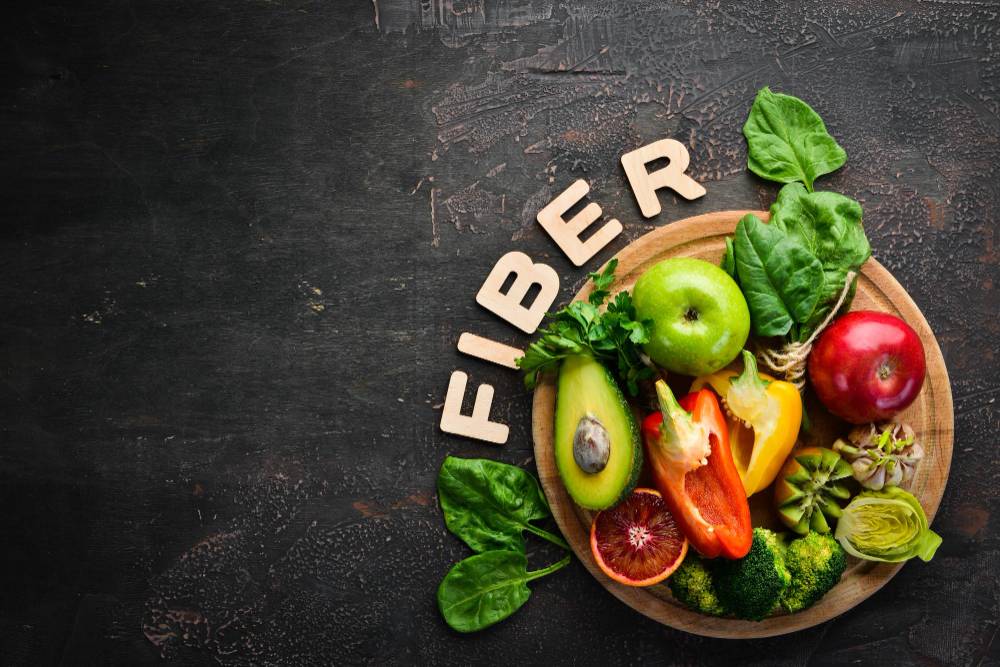
High fiber foods can help with constipation on a GLP-1 medicine, but only when you add them gently. A sudden jump in fiber on a slowed stomach often brings gas, bloating and heaviness instead of relief.
Semaglutide and tirzepatide both slow stomach emptying, and both FDA labels list constipation as a reaction seen in trials. That makes high fiber foods a sensible tool and a tricky one. The method matters more than the food list.
This guide gives you the official fiber numbers, a tiered list of high fiber foods sorted for a small appetite, a seven step method for adding them slowly and the warning signs that mean food is not the answer.
| Read this first. Compounded semaglutide and compounded tirzepatide are not FDA approved and have not been reviewed by the FDA for safety, efficacy or quality. Any FDA label quoted below belongs to a branded product. Compounded preparations have no approved label and no rates of their own. Results vary by individual. |
Table of Contents
High Fiber Foods and a Slower Stomach: Why the Usual Advice Needs a Tweak
Most lists of high fiber foods assume a normal stomach and a normal appetite. A GLP-1 medicine changes both. Food leaves the stomach more slowly, and portions shrink.
| Fact | Where it comes from | Why it matters for fiber |
| “Semaglutide delays gastric emptying.” | Wegovy label, Section 12.2 | A large serving of high fiber foods can sit heavily in a stomach that clears slowly |
| “Tirzepatide delays gastric emptying.” | Zepbound label, Section 12.2 | The same slowing applies with tirzepatide |
| Constipation appeared more often with the medicine than with placebo in the weight reduction trials | Section 6.1 of both labels | Many people have a real reason to want more fiber |
| Postmarketing reports include “ileus, intestinal obstruction, severe constipation including fecal impaction” | Section 6.2 of both labels | Some constipation is a medical problem, not a diet problem |
These labels describe branded products. They set no expectations for compounded preparations.
Here is the tension. You may need more fiber, but you have less room for food. The answer is smarter choices of high fiber foods, added one step at a time.
How Much Fiber From High Fiber Foods Is Enough? The Official Numbers
Three trusted sources give three slightly different numbers. They agree on the direction and differ on the exact target.
| Source | Fiber number | What it is |
| FDA | 28 grams a day | The Daily Value on Nutrition Facts labels, described as a recommended amount to consume each day |
| NIDDK | 22 to 34 grams a day | A range for adults that depends on age and sex |
| Memorial Sloan Kettering | About 25 grams (females) or 35 grams (males) | Typical daily need, with advice to ask your provider first |
Treat these as reference points, not a score to hit on day one. A GLP-1 medicine lowers appetite, so reaching 28 grams can take real planning. Memorial Sloan Kettering advises talking with your provider first.
A target is a destination. The method later in this guide is the route.
The Nutrition Facts panel on any package lists dietary fiber in grams per serving, beside the serving size. Check both lines. A good fiber number for a serving you would never finish does not suit a small appetite.
The Best High Fiber Foods for a Small Appetite, Sorted by Fiber Per Serving
When appetite is small, fiber per serving matters more than variety. The table below follows the published Memorial Sloan Kettering chart. Serving sizes vary by food, so check the full chart or the package label.
| Tier | High fiber foods | Fiber per serving |
| Highest | Avocado, artichoke, raspberries, blackberries, lentils, chickpeas, black beans, almonds, pistachios | About 7 grams or more |
| Strong | Pears, prunes, cooked kidney beans, cooked pinto beans, shredded wheat cereal, acorn squash | About 6 to 7 grams |
| Middle | Apples with skin, mango, chia seeds, edamame, ground flaxseed, oatmeal, quinoa, walnuts | About 4 to 5 grams |
| Gentler | Blueberries, sweet potato, green beans, Brussels sprouts, beets | About 3 to 4 grams |
| Lowest of the group | Banana, orange, broccoli, carrot, kiwi, okra, whole grain bread | About 3 grams |
Read the table by serving, not by food group. A half cup of lentils sits in the top tier, while a banana sits in the bottom one. The NIDDK list covers the same five groups: whole grains, legumes, fruits, vegetables and nuts.
Two ways to use the table with a small appetite:
- Choose familiar foods first. A food you already tolerate is the safest place to add fiber.
- Lean on the upper tiers. A small serving from the top rows delivers more fiber than a large serving from the bottom row.
Fitting High Fiber Foods and Protein Onto One Small Plate
Protein deserves first claim on a small plate, and many high fiber foods carry protein too. Lentils, chickpeas, black beans, edamame, almonds and pistachios appear in the tiers above and bring both nutrients.
One serving of beans or lentils can cover part of your protein and part of your fiber. The high protein foods on semaglutide guide for women shows more ways to build a protein first plate.
To see the split on paper, the macro calculator breaks a day of eating into protein, carbohydrate and fat. It supports your provider’s guidance and does not replace it.
Small Swaps: Raising High Fiber Foods Without Raising Portion Size
A small appetite changes the question. You are asking how to get more fiber from the food you already eat. Swaps do that, because the portion stays the same while the fiber per bite rises.
| Instead of | Try | Why it helps |
| Refined grain bread or pasta | Whole grain bread, or a spoonful of lentils beside the pasta | Whole grains and legumes carry more fiber in the same space |
| Peeled fruit | The same fruit with the skin on, such as an apple or a pear | Skins hold fiber that peeling removes |
| Crackers as a snack | A small handful of almonds or pistachios | Both nuts sit in the top tier and bring protein too |
| Fruit juice | Whole fruit, such as raspberries or an orange | Whole fruit keeps its fiber, and juice does not |
The peeling swap matches a tip from Medical News Today: keep the skin on fruit and vegetables. Make one swap at a time.
High Fiber Foods That Need Extra Care When Your Stomach Runs Slow
Fiber type and food form change how fiber feels. Beans and lentils sit in the top tier, and many people also link them with gas. Large raw portions take up room and chewing time. These are comfort points, not medical rules.
| Common snag | A gentler way to use the same food |
| Gas after beans or lentils | Start with a few spoonfuls of well cooked beans or lentils mixed into a familiar dish |
| A large raw salad feels heavy | Cook the vegetables until soft and keep the portion small |
| A big bowl of bran cereal sits like a stone | Use a small bowl and top it with fruit from the tiers above |
| Whole nuts feel dense | Use a small handful, or a spoonful of nut butter |
Two Kinds of Fiber, One Mixed Plate
One more layer helps. Fiber comes in two broad forms. Soluble fiber dissolves in water and turns gummy. Insoluble fiber adds bulk and does not dissolve. Most high fiber foods carry both, in different mixes.
| Form | What it does in the gut | Where you will find it in the tiers |
| Soluble fiber | Soaks up water and softens stool | Oatmeal, lentils, beans, pears, apples and chia seeds |
| Insoluble fiber | Adds bulk to stool | Whole grains, nuts and the skins of fruit and vegetables |
You do not need to count each form. A mix of high fiber foods covers both.
This guide stays with food. If one food keeps causing discomfort, tell support and set it aside for now.
Do High Fiber Foods Make Feeling Full Worse? Weighing the Trade-Off
Fiber adds bulk, and bulk adds fullness. On a GLP-1 medicine that effect can stack on top of slower stomach emptying. For some people, high fiber foods feel comfortable. For others, a fiber heavy meal feels like too much, too soon.
The aim is enough fiber without squeezing out protein or fluids.
- Protect protein first. Eat the protein on your plate before the fiber food, so fullness does not crowd it out.
- Keep each portion of high fiber foods small. Small amounts across the day usually feel lighter than one large serving.
- Skip the fiber food when you are already full. Stopping at comfortable is still the rule.
If every meal feels like too much, even small ones, that is not a fiber question. Contact AHC support and describe what you are eating and drinking in a normal day.
How to Add High Fiber Foods Slowly: A Seven Step Method
NIDDK gives the core instruction in one line: “Be sure to add fiber to your diet a little at a time so your body gets used to the change.” Here is how to follow it.
- Pick one meal. Choose a meal that already feels easy, such as breakfast or lunch. Change nothing else.
- Pick one food. Choose from the tiers above, and favor something you already like.
- Start with a small portion. A few spoonfuls is enough. A full serving can wait.
- Add fluids across the day. Fiber works better with liquids. Ask your provider or AHC support how much suits you.
- Hold steady until it feels comfortable. Do not add anything new while gas, bloating or heaviness are still present. Your stomach sets the pace, not a calendar.
- Take the next step. Add a slightly bigger portion, or add a second food at another meal. Change one thing at a time.
- Write it down. Note the food, the portion and how you felt. This record becomes your message to support.
How to Read Your Stomach’s Response to Each Step
| What you notice | What it usually means | What to do |
| Comfortable, no gas or heaviness | The step suits your stomach | Hold here, then take the next step when you are ready |
| Mild gas, bloating or a heavy feeling | The step was a little too big | Go back to the last comfortable portion and hold there |
| Hard, swollen belly, lasting pain or repeated vomiting | Not a food problem | Stop adding high fiber foods and seek medical care or contact AHC support |
If discomfort lingers at the last comfortable level, tell support. Results vary by individual.
Fluids and High Fiber Foods: Why Water Decides How Fiber Feels
NIDDK pairs fiber with liquids on purpose: “Drink plenty of liquids to help the fiber work better.” The same page tells readers to ask a health care professional how much liquid they should drink each day.
A slowed stomach adds a wrinkle. A large drink with a meal takes up room that food needs. Many people find it easier to sip across the day than to drink a lot at once.
Two signs point to a fluid or fiber mismatch:
- Stools turn hard and dry despite more high fiber foods. That can mean fluids are too low.
- Stools turn loose and frequent soon after a fiber increase. That can mean the step was too big. The diarrhea on GLP-1 guide explains what is common and when to worry.
When High Fiber Foods Are Not the Answer: Warning Signs
Some constipation does not respond to food, and more fiber is the wrong move. Both labels list “ileus, intestinal obstruction, severe constipation including fecal impaction” among postmarketing reports in Section 6.2.
Postmarketing reports do not tell you how often something happens. They tell you severe constipation deserves attention, not another serving of beans. These signs are escalation only:
- A hard, swollen belly that keeps getting worse
- Severe or lasting abdominal pain
- Repeated vomiting or fluids that will not stay down
- No bowel movement and no gas together with pain or swelling
- Fainting or near fainting
If any of these appear, seek medical care or contact AHC support through live chat or [email protected]. Do not add more fiber and do not try home fixes. For ordinary constipation, the GLP-1 constipation guide covers what to do, and the complete GLP-1 side effects guide explains when to call your provider.
What to Send Support About High Fiber Foods and Your Digestion
A clear message gets a faster, better answer. If high fiber foods are not settling well, send support these points.
- What you added. Name the food and the portion.
- What you changed and when. Say whether it was one change or several.
- How your stomach feels. Note gas, bloating, heaviness or pain.
- How your bowels are moving. Describe stools as hard, normal or loose.
- Your fluids on a normal day. Include what you manage and what you skip.
Dose questions follow one route. Your request goes to AHC support, and the medical officer reviews it. Never change your medicine on your own to manage digestion.
High Fiber Foods FAQs: Quick Answers on Fiber, Fluids and GLP-1
What are the best high fiber foods to eat on a GLP-1?
Lentils, chickpeas, black beans, raspberries, avocado and almonds sit in the top tier. Start with a food you already tolerate and add it in small portions.
How much fiber should I eat each day on a GLP-1?
Sources range from 22 to 34 grams, depending on age and sex, with 28 grams as the FDA Daily Value. Ask your provider which target suits you before you chase a number.
Can high fiber foods cause bloating on a GLP-1?
Yes, when fiber rises too fast on a slowed stomach. Go back to the last comfortable portion, hold there and tell support if it lingers.
How do I add high fiber foods without feeling too full?
Keep each portion small, eat your protein first and spread fiber across the day. Skip the fiber food when you already feel full.
Do I need more fluids when I eat high fiber foods?
NIDDK says liquids help fiber work better. Ask your provider or AHC support how much suits you, and sip across the day instead of drinking a lot with meals.
Which high fiber foods are gentlest on a slow stomach?
The gentler tier includes blueberries, sweet potato, green beans and beets. Cooked, softer forms are often easier than large raw portions.
Are fiber supplements better than high fiber foods?
This guide covers food only. Supplements are a separate decision, so ask your provider before you add one.
Can high fiber foods fix constipation on a GLP-1?
They can help with ordinary constipation when added gently with enough liquids. Severe signs call for medical care, not more fiber.
When should I stop adding fiber and contact support?
Stop if you have a hard, swollen belly, lasting pain, repeated vomiting, or no bowel movement and no gas with pain. Contact AHC support or seek medical care.
Should I change my medicine if high fiber foods do not help?
No. Never change your medicine on your own. Send your questions to AHC support, where the medical officer reviews them.
Conclusion: High Fiber Foods Work Best One Step at a Time
High fiber foods can ease constipation on a GLP-1 medicine, but a slowed stomach sets the pace. Pick familiar foods from the upper tiers, add one at a time and pair them with fluids. Results vary by individual.
Watch for the signs that food cannot fix: a hard swollen belly, lasting pain or repeated vomiting. Those need medical care or AHC support, not another serving of fiber.
Thinking about starting treatment? Begin your evaluation to complete the medical intake. A licensed provider reviews every order and decides whether treatment fits you. Approval is never automatic.
Medical Disclaimer
This article is general education and is not medical advice. It does not create a doctor patient relationship. Compounded semaglutide and compounded tirzepatide are not FDA approved and have not been reviewed by the FDA for safety, efficacy or quality. Brand names are used for educational identification only and belong to their trademark owners. Results vary by individual and depend on adherence, clinical guidance and lifestyle factors. For severe vomiting, fainting or severe abdominal pain, seek medical care or contact AHC support.