
Blog
Facial Changes During Weight Loss

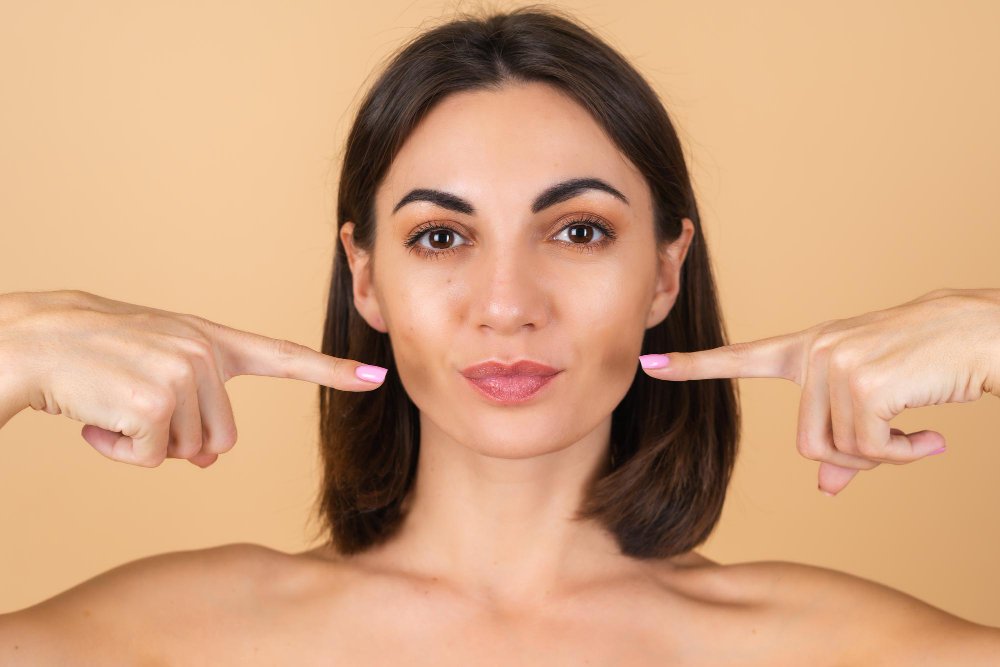
Facial changes during weight loss happen because the face stores fat in a dozen small compartments that shrink as the body loses fat, while the skin over them has less stretch than it did at twenty. In the first imaging study of the question, in Otolaryngology Head and Neck Surgery in 2025, researchers at Vanderbilt measured the midface on scans of 20 adults before and after a GLP-1 medication and found that the superficial fat layer lost more volume than the deep layer, and that the loss tracked with weight lost.
The result can read as hollowing at the temples and cheeks, deeper lines beside the nose and looser skin along the jaw. This guide explains the anatomy behind facial changes, what the research has measured, why some faces look older and others younger, what protects the face during weight loss, and how AHC handles the questions that come up.
| Key points Facial fat sits in separate compartments, so the face deflates unevenly rather than shrinking as one unit. Studies of large weight loss find a measurably older perceived age, driven by fat loss and skin laxity together. Protein, resistance training, sun protection and not smoking are the levers the evidence supports, and no study has shown that fast loss by itself is the cause. |
Table of Contents
Why Does My Face Look Different After Losing Weight?
Your face looks different because fat under the skin has left, and the skin, bone and muscle underneath have not changed shape to match. The face is not one smooth cushion of fat but a patchwork, which is why facial changes never happen evenly.
| Region | What sits there | What changes with fat loss |
| Cheeks | Three superficial compartments plus a deep medial pad behind them | Flattening, with the fold beside the nose looking deeper |
| Temples | A thin superficial pad over the temple muscle | Hollowing that makes the cheekbone stand out |
| Jawline and neck | Jowl fat and the fat under the chin | Skin that was supported from beneath now hangs, with visible bands |
The compartment map comes from cadaver work by Rod Rohrich and Joel Pessa at UT Southwestern in Plastic and Reconstructive Surgery in 2007 and 2008. Their 2008 paper described how losing volume in the deep cheek pad creates the illusion of a deeper nasolabial fold, which they called pseudoptosis. A 2012 CT study in the same journal found that these compartments also slide downward with age, so facial changes from weight loss and from aging push the same features the same way.
What Research Shows About Facial Changes After Weight Loss
Research on facial changes after weight loss is young, but three kinds of evidence agree: imaging shows the fat leaving, raters see an older face, and surveys show people notice facial changes themselves.
| Study and design | Who took part | What researchers found |
| 2025, Otolaryngology Head and Neck Surgery. Retrospective imaging study | 20 adults scanned before and after starting a GLP-1 medication, median age 54 | Midface volume fell, with the superficial layer losing more than the deep layer. Superficial loss tracked with weight lost |
| 2018, Plastic and Reconstructive Surgery. Prospective cohort | 65 adults rated by seven surgeons before and one year after bariatric surgery | Perceived facial age rose by about three years, more in men over 40 and in those with the highest starting weight |
| 2024, Aesthetic Surgery Journal Open Forum. Systematic review | 13 studies of surgical and medical weight loss | The most consistent change was fat loss along the mid cheek, with laxity in the central neck. Objective volume data were scarce |
| 2026, International Journal of Women’s Dermatology. Survey | 1,226 adults on prescription weight management | More than six in ten reported concerns including facial volume loss and skin laxity, rising with weight lost |
Retrospective means the scans were taken for other reasons and analyzed later, and 20 people is a small group. Perceived age in the 2018 study was judged by surgeons. The 2026 survey was self-selected and did not record how fast people lost weight. A review in Aesthetic Surgery Journal published this month concludes that facial changes look like ordinary deflation layered on each person’s anatomy and age, and that the independent effect of speed of loss remains uncertain.
Why Some Faces Look Older and Others Younger
Facial changes read as aging when skin has lost its spring, and as sharpening when it has not. Skin stretch depends mostly on age, sun and smoking, which is why the same facial changes can look five years apart on two people.
- Age. Skin collagen falls with age, a finding measured in the British Journal of Dermatology in 1975 and confirmed since.
- Sun. A 2015 review in Cold Spring Harbor Perspectives in Medicine describes how ultraviolet light fragments the collagen that gives skin its strength.
- Smoking. In a 2002 study of 98 adults in the British Journal of Dermatology, smokers made less of both main skin collagens.
- Starting fat. A 2006 Danish twin study in Age and Ageing found that among 1,826 people over 70, low body mass index went with an older-looking face.
- Dermal change. Skin biopsies from people who lost large amounts of weight show reduced collagen that had not recovered with time, in studies from 2010 and 2024 in Obesity Surgery and Plastic and Reconstructive Surgery.
The twin finding is often misread. It describes people over 70, where a fuller face hides wrinkles, and says nothing about adults in their thirties. Our guide to skin changes during medical weight loss covers the body as well as the face.
How Lean Mass Shapes the Face
Part of what facial changes take is muscle and other lean tissue, not fat. Weight loss takes some of both, and the share that comes from lean tissue depends on protein and training more than on the method of weight loss.
| Evidence | What was measured | What it found |
| 2025, Diabetes, Obesity and Metabolism. DEXA substudy of a tirzepatide trial | 160 adults scanned at baseline and 72 weeks | About three quarters of weight lost was fat and a quarter was lean mass, on medication and on placebo alike |
| 2026, Diabetes, Obesity and Metabolism. Meta-analysis of 20 trials | 15,782 adults across medication and lifestyle programs | Lean mass share ran from about a quarter to a third of weight lost, and fell below a fifth when programs added resistance training |
| 2022, Obesity Reviews, and 2012, American Journal of Clinical Nutrition. Meta-analyses of 114 and 24 trials | 4,184 and 1,063 adults | Resistance training held lean mass steady during calorie restriction, and higher protein diets kept more fat-free mass |
Meta-analysis means pooling trials, and the 2026 analysis had moderate differences between its trials, so treat the shares as rough. The 2025 substudy was funded by the maker of tirzepatide, with most authors employed there. Facial muscles are small, but lean tissue in the cheeks and jaw is part of what gives a face its structure. Our post on semaglutide and muscle loss covers the body-wide picture.
Facial Changes During GLP-1 Treatment at AHC
At AHC, facial changes show up on the same timeline as any other fat loss, usually after the early mild doses. The medication acts on appetite, not on the face, so facial changes are the result of fat leaving the compartments above.
| What you notice | What it may reflect | What to do at AHC |
| Cheeks flatter, jawline sharper | Superficial facial fat leaving first, as the imaging study found | Expected. Photos monthly in the same light |
| Hollow temples or tired eyes | Thin compartments with little fat to lose | Check your protein target and add resistance training |
| Skin looser at the jaw and neck | Skin laxity, more likely with age, sun and smoking history | Sun protection daily, and tell support if it worries you |
| Face changing faster than you expected | Appetite dropping ahead of intake | Tell support if eating feels hard, since low intake costs lean mass |
| Distress about appearance | Common and worth raising | Speak with your AHC provider or a mental health professional |
Dose changes are never automatic. Contact AHC support through live chat on the website or at [email protected], and AHC’s medical officer reviews any request. The phrase “Ozempic face” seen online uses a brand name that belongs to its trademark owner. AHC does not manufacture medications, and compounded semaglutide and tirzepatide are different products from the branded pens. Results vary by individual and depend on adherence, clinical guidance, and lifestyle factors.
| About compounded medication Compounded semaglutide and compounded tirzepatide are prepared by state-licensed pharmacy partners held to the same quality and safety standards. They are not FDA-approved and have not been reviewed by the FDA for safety, efficacy or quality. |
How to Protect Your Face During Weight Loss
You cannot choose where fat leaves, but you can soften facial changes by protecting skin and keeping lean tissue. These steps follow the evidence above and the American Academy of Dermatology’s public guidance.
- Hit your protein target. Higher protein diets kept more lean mass in the pooled trials, and a smaller appetite makes that harder.
- Lift something twice a week. Resistance training held lean mass steady across 114 trials. Bodyweight work counts.
- Wear sunscreen every day. The dermatology academy advises broad spectrum, SPF 30 or higher, before going outdoors.
- Do not smoke. Smokers produced less collagen in the 2002 study, and the twin study tied smoking to an older-looking face.
- Ask a dermatologist about a retinoid. The academy describes prescription retinoids as boosting collagen, with a warning to avoid them in pregnancy.
- Keep eating. Low intake speeds lean loss. Small regular meals with protein first are the answer, not skipping.
- Take monthly photos in the same light. Memory exaggerates facial changes. A photo record shows the real pace.
None of these steps restores fat to a compartment, and no study has tested whether water intake changes facial fullness. A 2015 study of 49 women found extra water improved skin hydration measures only. Our piece on where fat goes when you lose it explains why fat cannot be steered.
| Thinking about medical support? Learn how AHC’s medical weight loss program works. You complete a medical intake and pay online, then an AHC provider reviews it and decides whether treatment fits your health history. |
When Facial Changes Deserve a Professional Opinion
Most facial changes settle as weight stabilizes. A few situations deserve a conversation with a clinician.
| Sign | Why it matters |
| Rapid facial change alongside eating little | Low intake costs lean mass and nutrients, and a provider should review it |
| Facial change that is distressing or affects daily life | Body image concerns deserve support |
| Thinking about fillers or surgery | Surgeons quoted by the American Society of Plastic Surgeons advise waiting until weight has stabilized |
| Facial swelling, one-sided change or pain | Not a weight loss change. Seek care |
A 2025 systematic review in Aesthetic Plastic Surgery notes that weight on semaglutide tends to plateau around a year, and that regain after stopping is a reason for caution before any procedure. You can also speak with an AHC provider for $29.99.
Frequently Asked Questions
Why does my face look older after losing weight?
Facial changes come from fat compartments shrinking while skin keeps the stretch it had before. Older skin, sun exposure and smoking make the laxity more visible. A 2018 cohort found perceived age rose by about three years after large weight loss.
Does the face lose fat first?
Fat leaves the whole body at once, but facial changes show early because the compartments are small and sit under the skin. The 2025 imaging study found the superficial layer lost more than the deep.
Will my face fill back in if I stop treatment?
No study has measured facial volume after weight regain, so nobody can say. Weight regain after stopping treatment is documented, but facial changes were not studied.
Does AHC’s medication cause facial changes directly?
No. GLP-1 medications act on appetite and digestion. Facial changes come from the fat loss that follows, and the same facial changes follow surgery and diet.
What should I tell AHC support if my face is changing fast?
Tell support how much you are eating and whether meals feel hard. The medical officer reviews whether the dose or plan fits.
Can I ask my AHC provider about protein to protect my face?
Yes. A $29.99 provider consultation is a good place to discuss protein, resistance training and facial changes during treatment.
Does AHC recommend fillers or facial procedures?
No. AHC makes no recommendation on cosmetic procedures. The plastic surgery society’s advice is to wait until weight is stable, and that decision belongs with you and a surgeon.
Should I mention skin or body image concerns on my AHC intake?
Yes. Answer every intake question fully. Body image distress is a reason to speak with a provider or mental health professional.
Does compounded semaglutide or tirzepatide change the face differently from the branded pens?
AHC makes no claim either way. The research above used study or branded medication, and compounded medications are not FDA-approved.
Can I slow facial changes without slowing weight loss at AHC?
Protein, resistance training, sun protection and not smoking are the levers the evidence supports for facial changes. Dose decisions stay with your AHC provider and the medical officer, requested through support.
Tools to Plan Your Next Step
Two free tools help protect lean tissue while fat comes off.
- GLP-1 protein calculator. Set a daily protein target that fits a smaller appetite.
- Body fat calculator. Track body fat alongside the scale so you can see fat leaving rather than lean tissue.
Speak with an AHC provider for $29.99 about facial changes, protein and whether treatment fits you.
Medical Disclaimer
This content is for informational purposes only and is not medical advice. Compounded medications are prepared by state-licensed pharmacy partners. They are not FDA-approved and have not been reviewed by the FDA for safety, efficacy or quality. Prescriptions are issued by independently contracted, U.S.-licensed clinicians following an individual medical review, and approval is never guaranteed. Results vary by individual and depend on adherence, clinical guidance, and lifestyle factors. For questions about your treatment, contact AHC support through live chat on the website or at [email protected]. If you have severe symptoms, seek medical care.