
Blog
Can You Take Ozempic While Pregnant? What the FDA Labels Actually Say

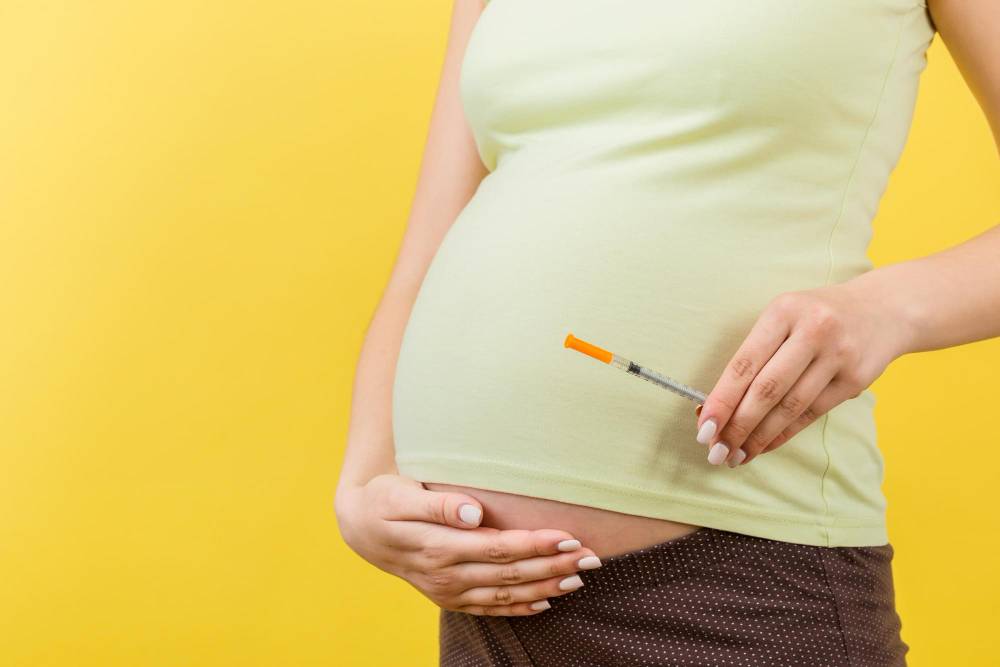
Ozempic and Pregnancy, What the FDA Labels Say About Stopping
No. The short answer to whether you can take Ozempic while pregnant is that the FDA label directs it be used in pregnancy only if the potential benefit justifies the potential risk to the fetus, and the Wegovy label directs that it be discontinued in pregnant patients using it for weight reduction. Both semaglutide labels advise stopping at least 2 months before a planned pregnancy.
Can you take Ozempic while pregnant is one of the most searched questions about this medication, and most published answers are close to right rather than right. Several confuse the two molecules. Several attribute a birth control warning to the wrong drug. This article quotes the prescribing information directly, names the label and section behind every statement, and keeps semaglutide and tirzepatide separate throughout, because on this topic they are not interchangeable.
Ozempic, Wegovy, Zepbound and Mounjaro are FDA-approved products belonging to their respective trademark owners. AHC does not manufacture medications and does not dispense any of them. Everything quoted below applies to the branded product named.
Can you take Ozempic while pregnant according to the label?
A precise point first, because the answer to can you take Ozempic while pregnant is widely reported incorrectly. None of these four products is formally contraindicated in pregnancy. The labels use different and more specific language.
| Product | Label section | What the label directs |
| Ozempic (semaglutide) | 8.1 | Use during pregnancy only if the potential benefit justifies the potential risk to the fetus |
| Wegovy (semaglutide) | 8.1 | Discontinue in pregnant patients using it for weight reduction. Weight loss offers no benefit to a pregnant patient and may cause fetal harm |
| Zepbound (tirzepatide) | 8.1 | Discontinue when a pregnancy is recognised. Weight loss offers no benefit to a pregnant patient |
| Mounjaro (tirzepatide) | 8.1 | Use during pregnancy only if the potential benefit justifies the potential risk |
| All four | 8.1 | Not listed as a contraindication in any of them |
The Wegovy label goes furthest, because its purpose is weight reduction rather than glycaemic control. It is also honest about the limits of what is known. Available pharmacovigilance and clinical trial data are described as insufficient to establish a drug-associated risk of major birth defects, miscarriage, or adverse maternal or fetal outcomes.
So the practical answer is no. The reason is not a proven harm in humans. It is that weight loss provides no benefit during pregnancy, animal studies showed effects at clinically relevant exposures, and human data is insufficient to rule risk out.
How long before pregnancy should you stop?
Both semaglutide labels give the same instruction, and both give a number.
| The figure | Value | Label section |
| Semaglutide, directed stop before a planned pregnancy | At least 2 months | Wegovy 8.3, Ozempic 8.3 |
| Semaglutide, elimination half-life | Approximately 1 week | 12.3 |
| Semaglutide, time present in circulation after the last dose | About 5 to 7 weeks | 12.3 |
| Tirzepatide, directed stop before a planned pregnancy | No window stated | Zepbound and Mounjaro labels |
| Tirzepatide, elimination half-life | Approximately 5 to 6 days | 12.3 |
The 2 month figure is not arbitrary. It rounds the 5 to 7 week circulation window up with margin, which is why the labels tie the instruction to the half-life rather than to a calendar convenience.
That arithmetic is worth understanding, because it explains why stopping a fortnight before trying is not what the label describes.
The tirzepatide difference almost nobody reports
Most articles treat these medications as one undifferentiated group. On pregnancy the labels differ in two specific ways that change what a reader should do.
| Molecule and brand | Stop before conception | What that means | Oral contraceptive interaction |
| Semaglutide, Wegovy | At least 2 months | An explicit instruction in Section 8.3 | No warning. Label states no clinically significant difference in ethinyl estradiol or levonorgestrel levels |
| Semaglutide, Ozempic | At least 2 months | An explicit instruction in Section 8.3 | No warning. No dose adjustment stated |
| Tirzepatide, Zepbound | No window stated | An absence of instruction, not a statement that stopping is unnecessary. Ask your provider what interval applies to you | Yes. Switch to a non-oral method or add a barrier method for 4 weeks after starting and 4 weeks after each dose increase |
| Tirzepatide, Mounjaro | No window stated | The same. Tirzepatide’s half-life is approximately 5 to 6 days, in the same range as semaglutide | Yes. The same 4 week rule |
Read the third column before the second. A blank window on the tirzepatide rows is not evidence that tirzepatide is safer near conception, and it should not be read that way.
What this means if you take a compounded medication
This section matters most for anyone reading as an AHC patient, and it is missing from every other page answering can you take Ozempic while pregnant.
Everything above is quoted from FDA-approved prescribing information for four branded products. Compounded semaglutide and compounded tirzepatide are not FDA-approved, have not been reviewed by the FDA for safety, efficacy or quality, and do not carry FDA-approved prescribing information. There is no compounded label to quote, and no compounded equivalent of Section 8.3.
That means two things in practice. The label windows above were written for the branded products named and cannot be transferred to a compounded prescription as though they were the same thing. And the pregnancy exposure registries listed below do not cover compounded medications.
If you are on a compounded prescription and you are pregnant, think you may be, or are planning to conceive, contact AHC support through live chat on the website or at [email protected] and speak with a licensed provider. Do not work out your own timeline from a branded label.
Does Ozempic affect birth control?
This is where the widely published answer is wrong, and getting it right matters because people act on it.
The Mounjaro and Zepbound labels carry an explicit warning that tirzepatide may reduce the efficacy of oral hormonal contraceptives due to delayed gastric emptying, an effect described as largest after the first dose and diminishing over time. The instruction is to switch to a non-oral contraceptive method, or add a barrier method for 4 weeks after initiation and for 4 weeks after each dose escalation. The labels add that hormonal contraceptives not taken by mouth should not be affected.
The semaglutide labels carry no equivalent warning. The Wegovy label states positively that no clinically significant differences in pharmacokinetics were observed for ethinyl estradiol or levonorgestrel taken alongside semaglutide. The Ozempic label states no dose adjustment is needed.
So the accurate version is that this is a tirzepatide instruction, not a class instruction. The practical side is covered in more detail in tirzepatide and birth control.
None of this is a reason to change contraception on your own. It is a reason to raise it with your provider before starting or increasing a dose.
What if you find out you are pregnant while taking it
Contact your provider promptly. The Wegovy label directs that the medication be discontinued when a pregnancy is recognised, and the Zepbound label says the same.
Do not treat a positive test as an emergency in the sense of panic. Treat it as a reason to make a call the same day. Your provider will stop the medication and coordinate your prenatal care.
There is also somewhere to report the exposure, and almost no article covers it.
Where to report a pregnancy exposure
Two of the four branded products run a dedicated registry. The other two do not, and that is where most tables leave readers with nowhere to go. Everyone has a route, and the last row is the one that applies to AHC patients.
| If you were taking | Dedicated registry | How to report |
| Wegovy (semaglutide) | Yes, run by Novo Nordisk | Telephone 1-877-390-2760 |
| Wegovy (semaglutide) | Same registry, online | Visit wegovypregnancyregistry.com |
| Zepbound (tirzepatide) | Yes, run by Eli Lilly | Telephone 1-844-524-0039 |
| Zepbound (tirzepatide) | Same registry, online or email | Visit pregnancyregistry.lilly.com/zepbound, or email [email protected] |
| Ozempic (semaglutide) | No registry section in the current label | Report to the manufacturer, and to FDA MedWatch |
| Mounjaro (tirzepatide) | No registry section in the current label | Report to the manufacturer, and to FDA MedWatch |
| A compounded semaglutide or tirzepatide prescription | No. Registries cover the branded products only | Contact AHC support, and report to FDA MedWatch |
FDA MedWatch accepts reports from patients and clinicians for any medication, including ones with no dedicated registry. It is the route that always exists.
Verify any telephone number or web address before acting on it. Contact details change, and the ones above were taken from labelling current at the time of writing.
Registries exist because human data on these medications in pregnancy is limited. Reporting an exposure contributes to the evidence future patients will rely on.
What the animal studies showed
Coverage of this tends to be either alarming or dismissive. The label is neither, and the exposure multiples matter.
In rats given semaglutide at up to 0.1 times the maximum recommended human dose based on drug exposure, the label reports reduced growth in offspring, and fetuses with heart, blood vessel and skeletal abnormalities at clinically relevant exposures. In rabbits at up to 0.3 times the human exposure, early pregnancy losses and minor kidney, liver and skeletal abnormalities were seen. In monkeys at up to 2 times human exposure, sporadic skeletal abnormalities were observed.
The honest framing is this. These findings occurred at exposures at or below the human dose, not only at extreme doses. That is more relevant than the usual reassurance that effects appeared only at massive quantities. At the same time, animal reproduction findings do not translate directly to humans, which is exactly why the labels describe human data as insufficient rather than reassuring.
For context the label also gives the baseline. In the US general population, the estimated background risk of major birth defects is 2 to 4 percent, and of miscarriage 15 to 20 percent in clinically recognised pregnancies.
What the human data shows so far
Two studies published since 2024 are the best available human evidence, and neither appears on the pages currently ranking for this question.
A 2026 study in Annals of Internal Medicine examined 3,572 pregnancies and compared continuing a GLP-1 medication into early pregnancy against stopping. Risk of nonlive birth was 29.7 percent with continuation against 27.1 percent without, an adjusted relative risk of 1.09. Major congenital malformation had a prevalence ratio of 1.21, small for gestational age 1.29, and large for gestational age 1.08.
The authors’ own conclusion is the part to read carefully. Risks were not definitively higher with continuation. However, the estimates for malformation and small for gestational age were described as imprecise, and as compatible with both no increased risk and clinically relevant differences in risk.
A 2024 multinational study in JAMA Internal Medicine compared periconceptional exposure against insulin in women with type 2 diabetes. Major congenital malformation prevalence was 8.3 percent among 938 exposed infants against 7.8 percent among 5,078 insulin-exposed infants, an adjusted relative risk of 0.95.
Taken together these findings are cautiously non-alarming and explicitly not conclusive. They are a reason not to panic about an accidental exposure. They are not a reason to continue the medication into a pregnancy. Results vary by individual and depend on adherence, clinical guidance, and lifestyle factors.
Why some people become pregnant unexpectedly
There are real mechanisms behind this, and they are worth knowing if you could become pregnant and do not want to.
Weight loss can restore ovulation in people whose cycles had become irregular, which is common in polycystic ovary syndrome. Insulin sensitivity improves. And in the case of tirzepatide specifically, delayed gastric emptying can reduce the effectiveness of an oral contraceptive, as the label describes.
A small 2026 study followed 20 people with PCOS, obesity and prediabetes taking metformin alongside a low dose of semaglutide for six months. Sixty percent achieved pregnancy. That is a striking figure from 20 people, so read it as a signal worth knowing about rather than a rate to expect.
No published source gives a rate for how often unintended pregnancy occurs during treatment, so anyone quoting one is estimating. The fertility side is covered separately in GLP-1 medication and fertility.
Can you breastfeed while taking semaglutide or tirzepatide?
The labels differ here too, by formulation as well as by molecule.
- Wegovy injection. No data on the presence of semaglutide in human milk, on effects on the breastfed infant, or on milk production.
- Wegovy tablets. The label states breastfeeding is not recommended during treatment, because of possible accumulation of an absorption enhancer used in the tablet and the availability of alternative formulations.
- Ozempic. No human milk data. Semaglutide was present in the milk of lactating rats, and the label notes the clinical relevance is unclear.
- Tirzepatide. There is human data. In 11 healthy lactating adults given a single dose, tirzepatide was undetectable in 164 of 171 milk samples, and the cumulative amount was equivalent to less than 0.02 percent of the maternal dose.
Having data is not the same as having an approval. This remains a decision for your provider based on your circumstances, and none of it applies to a compounded prescription, which carries no label.
Planning a pregnancy and managing weight at the same time
For many people this question comes up because they want to be at a healthier weight before conceiving, and the medication is what got them moving toward it.
The label instruction and that goal are not in conflict. They are a timing problem. Stopping at least 2 months before trying, as the semaglutide labels direct, sequences treatment and conception rather than overlapping them.
What that sequence should look like for you depends on where you are starting, how long you have been on treatment, and your wider medical history. The free BMI calculator, the weight loss calculator, the TDEE calculator and the body fat percentage calculator will give you numbers to bring to that conversation. The plan itself needs your provider, and ideally whoever will be managing your prenatal care.
Weight change after stopping any treatment varies between individuals, and it is worth discussing with your provider in advance rather than discovering afterwards.
Frequently asked questions
Can you take Ozempic while pregnant?
No. The Ozempic label states it should be used during pregnancy only if the potential benefit justifies the potential risk to the fetus, and Wegovy should be discontinued in pregnant patients using it for weight reduction. Weight loss offers no benefit during pregnancy.
Is Ozempic contraindicated in pregnancy?
Not formally. The labels use discontinue and benefit-versus-risk language rather than listing pregnancy as a contraindication. In practice the guidance is to stop, but the precise wording matters if you are discussing it with a provider.
How long before getting pregnant should I stop Ozempic?
At least 2 months, according to both semaglutide labels. The window accounts for the drug’s roughly one week half-life and 5 to 7 week circulation time after the last dose.
How long before pregnancy should I stop tirzepatide?
The Zepbound and Mounjaro labels do not state a window. Tirzepatide’s half-life is approximately 5 to 6 days, similar to semaglutide’s. Ask your provider what interval applies to you rather than assuming none is needed.
Does any of this apply to a compounded prescription?
Not directly. Compounded medications are not FDA-approved and carry no FDA-approved prescribing information, so there is no label window to follow. Contact AHC support and speak with a licensed provider about your own situation.
What happens if I got pregnant while taking Ozempic?
Contact your provider promptly so the medication can be stopped and your care coordinated. A 2026 analysis of 3,572 pregnancies found risks were not definitively higher when a GLP-1 was continued into early pregnancy, though the authors described the estimates as imprecise. You can also report the exposure.
Does Ozempic affect birth control?
The semaglutide labels carry no contraceptive warning, and Wegovy’s label states no clinically significant difference in ethinyl estradiol or levonorgestrel levels. The warning that appears widely online belongs to tirzepatide, not semaglutide.
Does tirzepatide affect birth control?
Yes, for oral contraceptives. The labels direct switching to a non-oral method or adding a barrier method for 4 weeks after starting and for 4 weeks after each dose increase. Non-oral hormonal methods should not be affected.
Where do I report a pregnancy exposure if there is no registry?
FDA MedWatch accepts reports from patients and clinicians for any medication. It is the route that exists regardless of whether a product has a dedicated registry, and it covers compounded prescriptions too.
Does semaglutide improve fertility?
Weight loss can restore ovulation in people whose cycles had become irregular, which is common in polycystic ovary syndrome. A small 2026 study of 20 people with PCOS reported 60 percent achieving pregnancy over six months, but 20 participants is too few to generalise from.
Can I breastfeed while taking semaglutide?
There are no human milk data for the injection. The Wegovy tablet label states breastfeeding is not recommended during treatment. Tirzepatide has human lactation data showing it was undetectable in 164 of 171 milk samples. Discuss your situation with your provider.
Can Ozempic cause a false positive pregnancy test?
There is no evidence in the prescribing information that semaglutide affects pregnancy test results. HCG-based tests detect a hormone that semaglutide does not contain or mimic.
How soon after giving birth can I restart?
That depends on whether you are breastfeeding and on your wider medical picture, and it is a decision for your provider. The labels do not give a postpartum interval.
Where to go from here
If you came here asking can you take Ozempic while pregnant because you are pregnant, think you might be, or are trying to conceive, the next step is a conversation with your provider rather than a website. Bring the label wording above with you if it helps, particularly the difference between the two molecules on contraception, because it is commonly misreported.
If you are on an AHC prescription, contact AHC support through live chat on the website or at [email protected].
Medical Disclaimer
This article is for general educational purposes and is not medical advice. It does not replace a consultation with a licensed healthcare professional or your prenatal care team.
Every label quotation applies to the FDA-approved branded product named. Ozempic, Wegovy, Zepbound and Mounjaro belong to their respective trademark owners, and AHC does not manufacture medications.
Compounded medications are prepared by state-licensed compounding pharmacies. They are not FDA-approved, have not been reviewed by the FDA for safety, efficacy or quality, and do not carry FDA-approved prescribing information.
Results vary by individual and depend on adherence, clinical guidance, and lifestyle factors. Do not start, stop or change any medication, or change your contraception, without speaking to a qualified provider. If you are pregnant or think you may be, contact your provider promptly.
Clinical services are provided by independently contracted, U.S.-licensed clinicians.