
Blog
Best Day and Time to Take a GLP-1: Your Injection-Day Planner

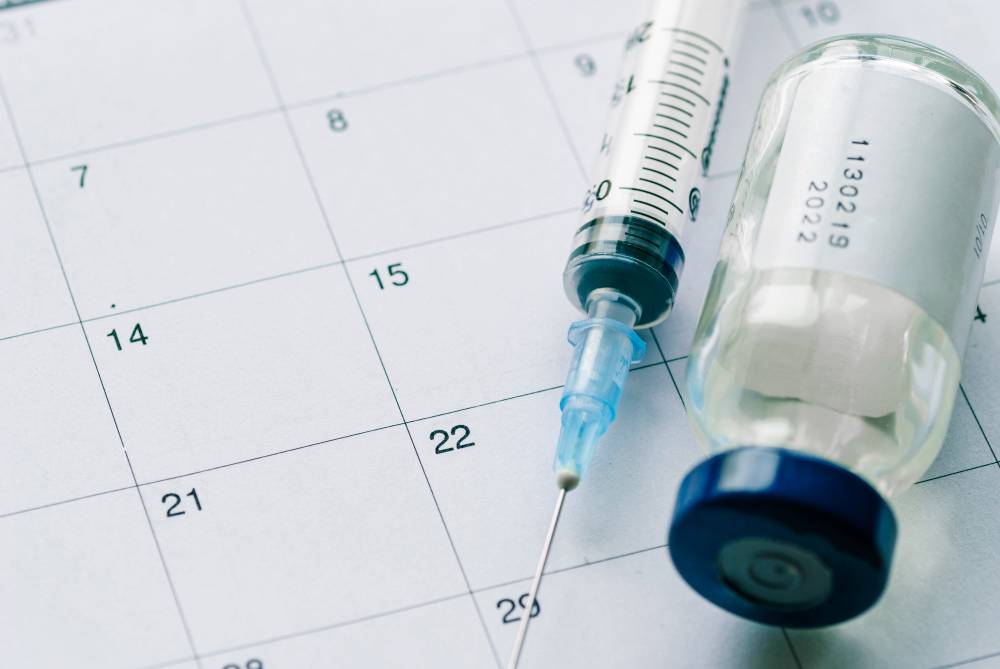
There is no single best time to take a GLP-1. Pick one consistent day each week and keep it. For injectable GLP-1s, the time of day is flexible, so pick what fits your routine. Some people prefer evening to sleep through early nausea. You can shift your day within safe limits, and a provider helps you adjust.
Compounded medications are prepared by state-licensed compounding pharmacies. Compounded semaglutide and tirzepatide are not FDA-approved and have not been reviewed by the FDA for safety, efficacy, or quality.
You started a GLP-1, or you are about to, and you want a simple plan. Which day? What time? Morning or night? Can you move it when life gets in the way? This injection-day planner answers all of it. The good news is that the best time to take a GLP-1 is mostly about consistency, not a magic hour. Pick a day you will remember, keep it steady, and learn the safe way to shift it when you need to.
Key takeaways
- Pick one consistent weekly day and keep it.
- For injectables, the time of day is flexible. Choose what fits your routine.
- Evening dosing helps some people sleep through early nausea. This is a preference, not a proven effect.
- You can shift your day within safe spacing, and a provider helps you adjust.
- Missed a dose? Take it within about 72 hours. After that, skip it. Never double up.
Table of Contents
What is the best day and time to take a GLP-1?
For a weekly GLP-1, there is no single best hour. Pick one consistent day and keep it every week. The time of day is flexible for injectable semaglutide and tirzepatide, so choose what fits your life. Some people pick the evening to sleep through mild early nausea. Consistency matters more than the clock.
Here is the plain version. A weekly GLP-1 stays active in your body for days, so the exact hour you inject on your chosen day does not change how it works. Drugs.com notes you can take the injection at any time of day, as long as you take it on the same day each week. The table below weighs morning against evening so you can pick with confidence.
| Time of day | Why some people prefer it | Keep in mind |
| Morning | Easy to pair with an existing routine, so it is simple to remember. You are awake to notice how you feel. | If mild nausea shows up early on, it lands during your busy day. |
| Evening | Fits rushed mornings and busy schedules. Some people prefer it so they can sleep through mild early nausea. | The sleep-through-nausea benefit is anecdotal, not proven. Do not stay up watching for a reaction. |
Does the day of the week matter? How to pick your injection day
The day you choose matters more than the hour, because a weekly rhythm is easy to keep. Pick a day that is usually calm and predictable. Many people like Sunday, because they are home and can pair it with a weekly reset. Others pick a mid-week day that never changes. There is no wrong choice. What helps is linking the injection to something you already do every week.
Use this quick method to lock in your day:
- Choose a low-stress, predictable day.
- Pair it with a weekly habit you never skip, like meal prep or laundry.
- Set a repeating reminder on your phone.
- Write it on the calendar so the whole week knows.
NIDDK explains that GLP-1 medications work best when combined with a lifestyle program, so a steady weekly anchor also supports the food, movement, and sleep habits around it.
Morning vs night: is there a best time to take a GLP-1?
For injectable GLP-1s, morning and night both work. The choice is about your routine and how you feel. A morning shot lets you watch for any reaction while you are awake. An evening shot suits people with hectic mornings, and some prefer it so they can sleep through mild, early-week nausea. That sleep-through effect is a personal preference, not a proven benefit.
You do not need to time your GLP-1 around meals. Drugs.com notes the injection can be given with or without food, and that meal timing does not change how the injectable works. Oral GLP-1 tablets follow different rules, so remember that this planner is about the weekly injection, not a pill.
Mild nausea often eases as your body adjusts. Severe or persistent vomiting, fainting, or severe abdominal pain are not something to manage at home. Contact AHC support or seek medical care.
Can you change your GLP-1 day? The safe-shift rule
Yes, you can change your GLP-1 day. Life shifts, travel happens, and your schedule is allowed to move with it. The one rule is spacing. Do not crowd two doses too close together. The manufacturer’s dosing instructions for weekly semaglutide say you may change your day as long as your last dose was at least 2 days (about 48 hours) before. After the switch, keep your new day steady.
Here is how to move your day without cutting it too close:
- Confirm your last dose was at least about 2 days ago.
- Take your dose on the new day.
- Keep that new day every week going forward.
- If you are unsure, message AHC support before you change anything.
Crossing time zones or heading out of town? Plan the shift before you go, and see our guide to traveling with your GLP-1 medication for storage and timing on the road.
What if you miss a dose? The weekly 5-day rule
Missing a dose happens. What you do depends on how long it has been. The rule people search for is the 5-day rule: the manufacturer’s instructions for branded weekly semaglutide say to take a missed dose within 5 days, and to skip it if more than 5 days have passed. AHC’s guidance is more cautious and provider-set. If it has been under about 72 hours, take your dose as soon as you remember, then return to your normal day. If more than about 72 hours have passed, skip it and take your next dose on your usual day.
Never take two doses close together to catch up. Doubling up raises your risk of nausea and vomiting without helping results. When in doubt, message AHC support before your next dose.
A missed dose is different from a longer break. If you have been off for several weeks, a provider usually restarts you at a lower dose so your body can re-adjust. For that path, see what to expect when restarting a GLP-1 after a break.
Build an injection-day routine that sticks
A schedule only helps if you keep it. The trick is to make your injection day automatic. Habit pairing works best. Attach the shot to something you already do without thinking, then set a repeating reminder on your phone for the same day. Keep your supplies in one place so nothing slows you down.
Rotate your injection site each week to keep the skin comfortable, following the instructions your provider sends. To learn what a normal spot looks like versus one worth asking about, read our guide to GLP-1 injection site reactions and what they mean.
Keep your reminders and your provider messages together. If you use the My AHC app, that is where you reach support to adjust your plan and keep your evaluation and messages in one place.
How a supervised program sets and adjusts your schedule
Your schedule is provider-set, but it is not rigid. A licensed provider reviews your treatment, and your dosing instructions arrive by email after approval, never automatically. If your life changes, you do not have to guess. AHC support can help you shift your day, talk through morning versus evening, or plan around travel and work.
Rotating shifts make this harder, and a fixed weekly day is exactly what helps. If you work nights or swing shifts, we cover picking and keeping your day in GLP-1 for shift workers. The point of a supervised program is simple. You get a steady plan, plus a real person to adjust it when you need to.
Frequently asked questions
Do you have to take a GLP-1 at the same time every week?
Not the same clock time, but the same day each week. Drugs.com notes you can take the injection at any time of day, as long as it is once weekly on your chosen day. The day is what keeps the medication steady in your body.
What is the best time of day to take semaglutide or Ozempic?
There is no single best time for the injectable. Any time works, as long as you keep the same day each week. You can take it with or without food. Pick the time that helps you stay consistent.
Should I take my GLP-1 in the morning or at night?
Either is fine, so choose what fits your routine. Morning lets you watch for how you feel while awake. Some people prefer evening so they can sleep through mild early nausea, though that effect is anecdotal rather than proven.
What day of the week should I take a GLP-1?
Pick a day that is usually calm and easy to remember. Many people choose a weekend day or a fixed mid-week day. Pair it with a weekly habit you never skip, then keep that day going forward.
Can you change the day you take Ozempic or semaglutide?
Yes. The manufacturer’s instructions say you may change your day as long as your last dose was at least 2 days before. Take your dose on the new day, then keep it steady. Message AHC support if you are unsure.
How many days can I move my injection?
Keep at least about 2 days between doses when you shift your day, based on the manufacturer’s labeling. Moving it by a day or two is usually fine. A provider or AHC support can help you plan a bigger change safely.
What happens if I miss a dose of my GLP-1?
If it has been under about 72 hours, take it as soon as you remember, then return to your normal day. If more than about 72 hours have passed, skip it and resume on your next scheduled day. Never double up to catch up.
What is the 5-day rule for a missed weekly dose?
The 5-day rule comes from the manufacturer’s instructions for branded weekly semaglutide: take a missed dose within 5 days, or skip it if more time has passed. AHC’s guidance is more conservative and provider-set. Follow the instructions your provider and AHC support give you.
Can I take my GLP-1 with or without food?
Yes. Drugs.com notes the injection can be given with or without food, and meal timing does not change how the injectable works. That is one reason the time of day is flexible. Oral GLP-1 tablets follow different rules.
Does the time of day affect weight-loss results?
There is no evidence that a specific hour changes your results. Consistency with your weekly day matters far more than the clock. Results vary by individual and depend on adherence, clinical guidance, and lifestyle factors.
Can I take my injection late in the day if I forgot in the morning?
Yes. The time of day is flexible for injectables, so taking it later on the same day is fine. Just keep it to your chosen day, and set a reminder so it is easier next week.
Do shift workers need a different schedule?
The same principle applies. Pick one consistent day and keep it, whatever shift you are on, because the day matters more than the hour. Our guide to GLP-1 for shift workers covers timing, sleep, and meals on nights and rotations.
Are compounded semaglutide and tirzepatide FDA-approved?
No. Compounded semaglutide and tirzepatide are prepared by state-licensed compounding pharmacies and are not FDA-approved or reviewed by the FDA for safety, efficacy, or quality. A licensed provider reviews every request before any prescription is issued.
Start with a provider who sets a schedule that fits your life
You should not have to guess your schedule alone. With AHC, compounded semaglutide and tirzepatide are physician-reviewed and shipped to your door, and your dosing instructions arrive by email after a provider approves your treatment. If your days change, support helps you adjust safely. Complete a free evaluation to see if you qualify.
Disclaimer
This article is for general education and is not medical advice. Compounded medications are not FDA-approved and have not been reviewed by the FDA for safety, efficacy, or quality. Results vary by individual and depend on adherence, clinical guidance, and lifestyle factors. Always follow the dosing instructions your provider sends you, and contact AHC support at [email protected] with any questions about your treatment.