
Blog
Compounded Semaglutide Pink? Here Is What the Colour Means

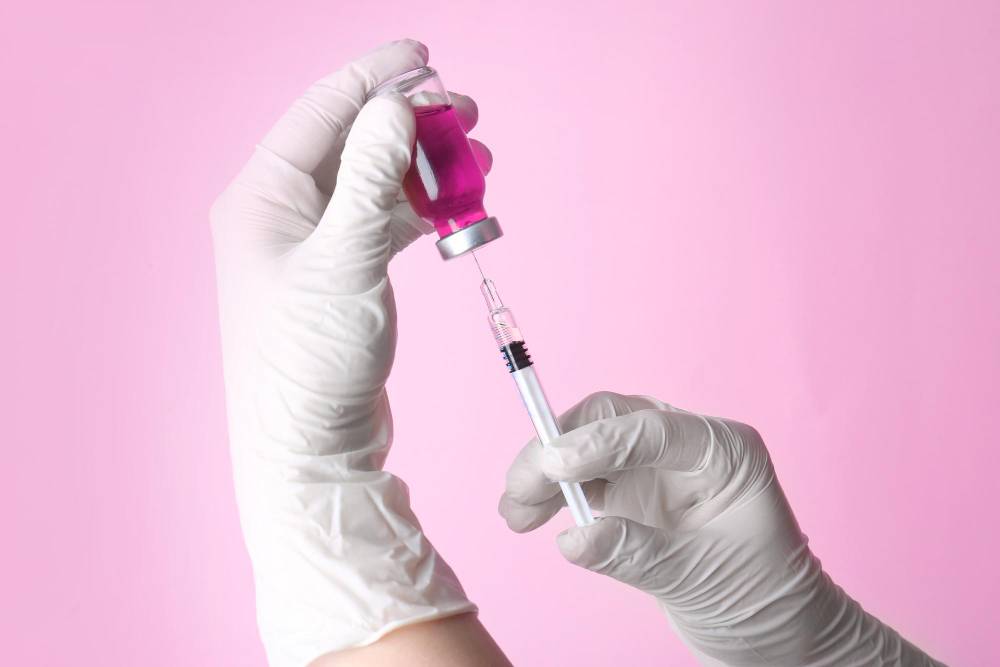
Compounded semaglutide pink in the vial is caused by the Vitamin B12 in the formula. B12 is naturally deep red, and at the concentration used in a compounded GLP-1 vial it gives the liquid a pink or rose tint. That colour is expected, and it is not a sign that anything is wrong.
If you have come here holding a vial and comparing it against a photo someone posted online, you are not the first. GLP-1 colour is one of the most common things new patients ask about, and the answer is simpler than the worry suggests.
This page covers what is in an AHC vial, why the colour varies between providers, what normal looks like, and the specific things that are worth a message to support.
Table of Contents
Compounded Semaglutide Pink, Clear or Cloudy: What Each One Means
Three different observations get lumped together under “my medication looks strange”. They are not the same, and only one of them matters.
| What you see | What it usually means | What to do |
| Pink or rose tint | Vitamin B12 in the formula | Nothing. This is expected |
| Completely clear | A formula without B12, or a different provider | Nothing, if it matches your label |
| Slight variation between vials | Normal batch to batch variation | Nothing |
| Cloudy or hazy | Not expected | Contact support before using |
| Floating particles or specks | Not expected | Do not use. Contact support |
| Separation into layers | Not expected | Do not use. Contact support |
The first three rows cover almost every message support receives about colour. The bottom three are the ones worth acting on.
Why Compounded Semaglutide Pink Comes From the Formula Itself
The AHC formula is GLP-1 medication plus Vitamin B12. That is it.
There is no third ingredient doing something mysterious to the colour. B12, properly called cyanocobalamin, is one of the few vitamins with a strong natural colour. In its pure form it is a dark red crystalline powder. Dissolved into an injectable solution at the concentration used here, it reads as pink.
If you have ever had a B12 injection on its own, you will have seen the same thing. Those are usually a much deeper red, because the concentration is higher.
So the pink in your vial is not a dye, a preservative or a marker. It is one of the two active components doing exactly what it does in every other product it appears in.
Why Vitamin B12 Is in Your Compounded GLP-1 at All
The pairing is not accidental, and the colour is a side effect rather than the purpose.
B12 is included in the compounded formulation as part of the preparation. It is a water soluble vitamin, which means the body does not store large amounts of it, and it is commonly included in injectable formulations of this kind.
What matters for this page is that its presence explains the colour. If your vial is pink and your label says GLP-1 with Vitamin B12, the two facts are consistent and there is nothing further to check.
One thing to be clear about. Glycine is not in the AHC formula. If you have read older material elsewhere that mentions it as a component of compounded GLP-1 preparations, that does not describe what AHC dispenses.
For more on the formula itself, see our guide to why compounded GLP-1 and Vitamin B12 come in one vial.
Why Your Compounded Semaglutide Pink May Not Match Someone Else’s
This is where most of the confusion starts. Someone posts a photograph, yours looks different, and the assumption is that one of you has a problem.
Several things can make two vials look different without either being wrong.
- Different formulas. Not every compounded GLP-1 includes B12. A provider dispensing GLP-1 alone will produce a clear solution.
- Different concentrations. More B12 relative to volume reads as a deeper colour.
- Different medications. Tirzepatide and semaglutide are prepared at different concentrations.
- Lighting and photography. A vial under warm kitchen light photographs differently from one under daylight. Phone cameras exaggerate this.
- Glass and label. An amber vial or a wraparound label changes how the liquid reads.
The useful comparison is not against a photograph on the internet. It is against your own previous vial from the same provider, and against what your label says you were sent.
What Normal Looks Like in a Compounded Semaglutide Vial
If you want a simple checklist to run when a new vial arrives, this is it.
- The liquid is consistent throughout, with no layers or settled material at the bottom
- It is clear rather than hazy, whatever its tint. You should be able to see through it
- There are no visible particles, specks or fibres
- The colour matches your previous vial from the same provider and the same medication
- The seal and cap are intact, with no cracks in the glass and no sign of leaking
- The label is readable and matches what you ordered
Colour on its own is almost never the problem. Clarity is the thing to look at. A pink solution you can see through is behaving normally. A pale solution with haze in it is not.
When GLP-1 Colour Is Worth a Message to Support
Four observations are worth stopping for, and in each case the answer is the same: do not try to judge it yourself.
| What you notice | Why it matters |
| Cloudiness or haze | Clarity is a better signal than colour. Haze is not expected |
| Particles, specks or floating material | Not expected in a properly prepared solution |
| A sharp change from your last vial | Worth checking even if the new vial looks fine on its own |
| Colour change after storage | May point to a storage or temperature issue |
Contact AHC support through the live chat on the website or at [email protected]. Describe what you are seeing and send a photograph if you can. Photographs under ordinary daylight are far more useful than ones taken under kitchen lighting.
Customers never deal with the pharmacy directly at any stage. Everything routes through AHC support, including anything that needs checking with the pharmacy.
What GLP-1 Colour Cannot Tell You
It is worth being equally clear about what the colour does not indicate, because people read far more into it than it can carry.
What Colour Says About Strength
A deeper pink does not mean a stronger dose. Concentration is stated on your label and nowhere else. Two vials at the same strength can look slightly different, and two that look identical can be different strengths.
It does not tell you the medication is working. There is no relationship between how a solution looks and how someone responds to treatment. Results vary by individual and depend on adherence, clinical guidance and lifestyle factors.
What Colour Says About Quality
A pale vial is not weaker and a vivid one is not better. Appearance is a product of the formula, not a grade.
It does not tell you it has expired. The beyond use date on your label is the reference for that, not the colour. If you are new to this medication, what semaglutide is and how it works is a useful starting point.
People compare vials because there is no other visible signal to compare. That is understandable, but colour is simply not carrying the information they are hoping to read from it.
Checking Each New GLP-1 Vial, Month After Month
Each GLP-1 vial from AHC is designed to cover a 28 day period, so a new one arrives roughly every month. A thirty second check each time is a better habit than a detailed inspection once and never again.
- Compare the new vial against the one you just finished. This is the only comparison that means anything. Same provider, same medication, same expectations.
- Check the label before the liquid. Confirm the medication and strength match what you ordered. Label first catches more problems than looking at the glass. Our guide to drawing up compounded semaglutide from a vial covers what to check as you go.
- Hold it against a plain white background in daylight. Haze and particles show up against white and disappear against a patterned kitchen counter.
- Note the beyond use date. Knowing it now is easier than working it out in week three.
- Store it before you do anything else. The check takes thirty seconds and the fridge can wait that long, but not longer.
If anything differs from last month in a way you cannot explain, that is the moment to message support rather than the moment to decide for yourself.
How Compounded Medication Is Prepared, and Why That Shows in the Vial
A little background makes the colour question make more sense.
A compounding pharmacy prepares medication to fill an individual prescription. The components are combined at the pharmacy rather than arriving pre-mixed from a production line, which is the central difference from a branded product.
That is why two providers can dispense the same active medication and produce vials that look different. They are not the same preparation. Each pharmacy works to its own formulation.
AHC’s is GLP-1 medication plus Vitamin B12. Because B12 is one of the few vitamins with a strong natural colour, it is visible in the finished solution in a way that most components are not.
Compounded medications are not FDA approved and have not been reviewed by the FDA for safety, efficacy or quality, as set out in the FDA’s guidance on compounding. They are prepared by state licensed pharmacy partners held to the same quality and safety standards, and prescribed by a licensed provider after an individual medical review.
Our guide to what is in compounded GLP-1 medication covers the formula in full.
Photographing Your Vial for Support
If you do need to send a photograph, a few things make it far more useful.
- Shoot in daylight near a window rather than under kitchen lighting, which pushes colour badly
- Use a plain white background. A sheet of paper works. Haze and particles disappear against a patterned surface
- Do not use flash, which creates glare on glass and hides exactly what you are trying to show
- Take one photo of the liquid and one of the label so the team can match what you have to what was dispensed
- Hold it steady and get close, but not so close the camera cannot focus
- Send both photos together with a short description of what you noticed
A clear photograph often resolves a question in one message rather than three.
How Storage Affects the Way Your GLP-1 Looks
Temperature and light are the two things that can change the appearance of an injectable solution over time, which is why storage instructions exist.
Keep your medication stored as the label instructs, and our guide to storing compounded semaglutide covers the detail. A fridge shelf is better than the fridge door, where the temperature swings every time someone opens it. Keep it in its original packaging so it stays out of direct light.
If your medication arrived with a melted ice pack, that on its own is normal and does not affect colour. Our guide on what a melted GLP-1 ice pack means explains why.
Each GLP-1 vial from AHC is designed to cover a 28 day period, so it will be in your fridge for several weeks. Over that time the appearance should stay stable. A noticeable change during normal storage is worth a message.
What to Do With a Vial You Are Unsure About
If you are holding a vial and genuinely cannot tell whether it is fine, the sequence matters.
- Do not inject it. Nothing is lost by waiting a day. A lot can go wrong by guessing.
- Keep it stored correctly while you wait for an answer. Do not leave it out on the counter while you think about it.
- Photograph it properly using the steps above.
- Message support with the photographs and a short description of what you noticed.
- Say what is different rather than asking whether it is safe. “It looks cloudier than last month” gives the team something to work with. “Is this okay” does not.
- Mention the delivery. If the package was delayed or arrived damaged, say so, because it changes the answer.
Support runs through live chat on the website and [email protected]. Customers never deal with the pharmacy directly at any stage, so this is the route for anything that needs checking with them.
One thing worth saying plainly. Asking is not a nuisance and it does not mark you out as difficult. A question about a vial takes a few minutes to answer and is the whole reason support exists.
Compounded Semaglutide Pink: Frequently Asked Questions
Why is my compounded semaglutide pink?
The Vitamin B12 in the formula. B12 is naturally deep red and gives the solution a pink or rose tint at the concentration used.
Is pink GLP-1 safe to use?
The colour itself is expected in a formula containing B12. If the liquid is clear of particles and haze and your label matches what you ordered, the colour is not a concern.
My friend’s GLP-1 is clear and mine is pink. Is one of them wrong?
Not necessarily. Formulas differ between providers. A GLP-1 preparation without B12 will look clear.
Does the depth of colour tell me the strength?
No. Do not judge concentration by colour. Your label states what you have been dispensed.
What if my vial looks cloudy?
Do not use it. Contact support. Clarity matters more than colour.
Are there particles floating in my vial?
If you can see specks or floating material, do not use it and contact support.
Does the colour fade over time?
Stored as instructed, the appearance should stay stable through the life of the vial. A noticeable change is worth reporting.
Is there glycine in the AHC formula?
No. The formula is GLP-1 medication plus Vitamin B12.
Does tirzepatide look different from semaglutide?
They are prepared at different concentrations, so the appearance can differ. Compare against your own previous vial of the same medication.
Can I contact the pharmacy about this?
No. Customers never deal with the pharmacy directly. Contact AHC support and the team will handle it.
Where do I reach support?
Live chat on the website, or [email protected].
The Short Version
Pink compounded GLP-1 is normal. The colour comes from Vitamin B12 in the formula, and it is expected.
What matters is clarity, not colour. A tinted solution you can see through is behaving as it should. Cloudiness, particles or a sharp change from your last vial are the things worth a message to support, and in those cases do not use the medication until someone has looked at it.
Ready to begin? You can start your medical evaluation online, and a licensed provider will review your intake. Our compounded semaglutide page sets out what the programme involves.
Related tools. Working out whether treatment is right for you? Our free BMI calculator and GLP-1 protein calculator are both free to use.
Medical Disclaimer
Compounded medications are prepared by state licensed compounding pharmacies. They are not FDA approved and have not been reviewed by the FDA for safety, efficacy or quality. This content is for informational purposes only and is not medical advice. Clinical services are provided by independently contracted, U.S. licensed clinicians. Speak with a licensed provider about your individual situation.