
Blog
Best Smoothie Recipes for Weight Loss on GLP-1 Medications

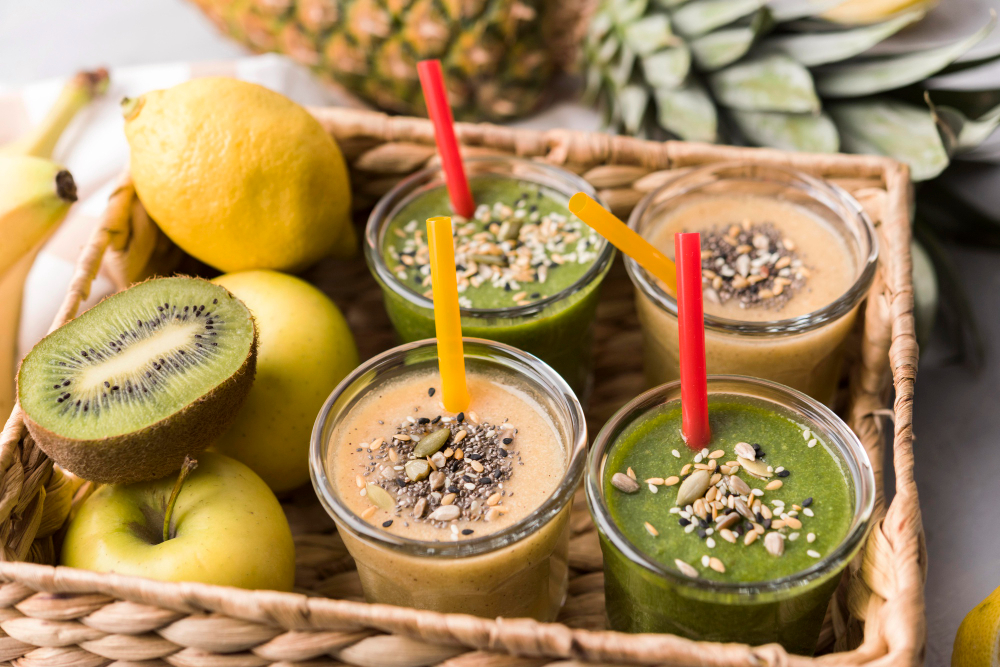
What Makes a Smoothie Recipe Actually Work for Weight Loss on a GLP-1?
The best smoothie recipes for weight loss on a GLP-1 medication share three things: at least 20 grams of protein, meaningful fiber, and minimal added sugar. Generic weight-loss smoothie content, built for a general audience, rarely accounts for what actually changes once semaglutide or tirzepatide slows digestion and suppresses appetite: smaller stomach capacity, a real risk of undereating protein, and days when nausea rules out anything heavy. This guide is built around that reality, not a generic diet template.
Key takeaways
- Protein density, not fruit content, is what separates a smoothie that supports weight loss from one that works against it.
- Smoothies help specifically because they bypass the texture and volume issues that make solid food difficult on a GLP-1, not just because they are convenient.
- 12 recipes below, each with exact protein, fiber, and calorie counts, organized by the actual problem you are solving: meal replacement, nausea, recovery, or a lower-calorie option.
- A troubleshooting section addresses the specific things that go wrong: clumpy protein powder, smoothies that do not fill you up, and how to adjust for dietary restrictions.
At a glance
| 20-30g protein target per meal-replacement smoothie | 25% of protein’s own calories spent digesting it, the highest of any macronutrient | 12 recipes below, organized by the problem each one solves | <10g protein in a smoothie is closer to a sugary drink than a meal, regardless of how it is marketed |
Why Smoothies Work Differently on a GLP-1 Medication
Semaglutide and tirzepatide slow gastric emptying, the rate at which food leaves your stomach. That is the entire mechanism behind the fullness these medications create, and it is also why solid food can feel unmanageable in a way it never did before, especially in the first weeks after a dose increase. A smoothie sidesteps the texture and chewing that make some foods hard to face, while still delivering real nutrition in a form your stomach can process without a fight.
That said, ease of drinking is not the same as nutritional value. A large fruit-and-juice smoothie moves through a slowed digestive system just as easily as a protein-forward one, but it does very little for you once it does. Research on satiety consistently shows that protein and fiber, not sugar, are what extend the feeling of fullness and blunt the blood sugar swing that drives hunger a couple of hours later. That is the standard every recipe below is held to.
The 3 Things Every Recipe Here Is Built Around
Protein first, measured, not estimated
Every recipe below lists exact protein grams. “High protein” without a number is a marketing phrase, not a nutrition fact, and it is the single biggest difference between this guide and most of what search results actually turn up for this topic.
Fiber for fullness without volume
Oats, chia, flax, and a modest amount of whole fruit add fullness and steadier digestion without requiring a large serving size, which matters when your stomach’s working capacity has genuinely changed.
Low added sugar, always
Frozen fruit in modest, stated amounts, never fruit juice, honey, or flavored syrups, which add calories and a blood sugar spike without adding fullness or nutrition.
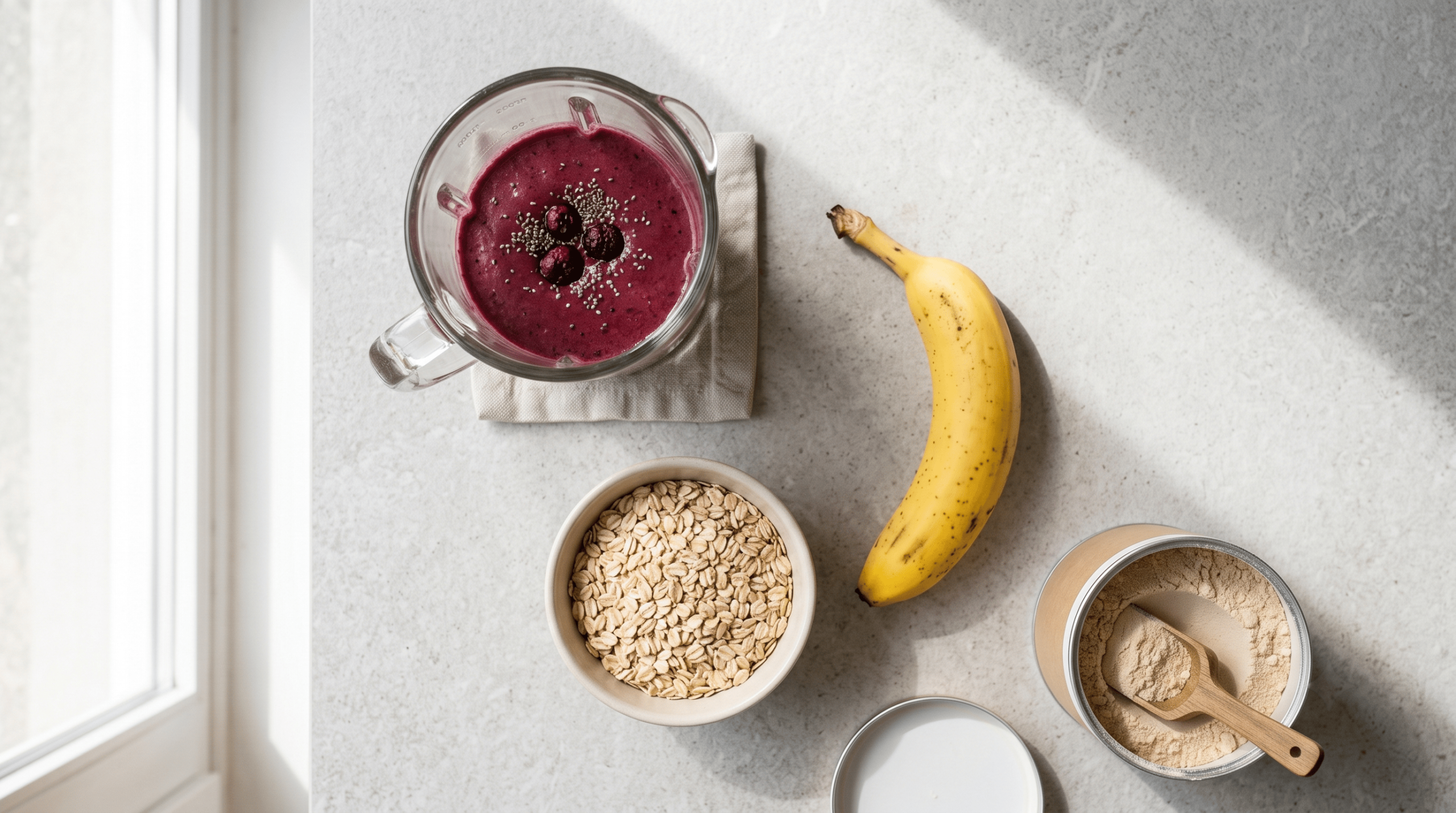
12 Smoothie Recipes for Weight Loss, Organized by What You Need
These smoothie recipes for weight loss are organized by the actual problem they solve. Every recipe lists protein, fiber, and approximate calories so you can plan around it, not guess.
Meal-Replacement Smoothies (25-30g protein)
Among these smoothie recipes for weight loss, these three are built to stand in for a full meal, not a snack, on days when eating solid food feels like more than you want to take on.
1. Peanut Butter Protein Smoothie
- 320 calories | 30g protein | 5g fiber
- 1 scoop whey or plant protein powder, 1 tbsp natural peanut butter, 1/2 frozen banana, 1 cup unsweetened almond milk, ice
2. Greek Yogurt Berry Smoothie
- 250 calories | 28g protein | 4g fiber
- 3/4 cup plain Greek yogurt, 1/2 cup frozen mixed berries, 1/2 scoop vanilla protein powder, splash of unsweetened almond milk
3. Cottage Cheese Vanilla Smoothie
Cottage cheese blends completely smooth and delivers more protein per calorie than almost any other base here.
- 220 calories | 25g protein | 2g fiber
- 1/2 cup cottage cheese, 1/2 frozen banana, 1/4 tsp vanilla extract, pinch of cinnamon, splash of milk of choice
4. Oat and Egg White Protein Smoothie
Unusual, but it works: pasteurized egg whites blend in seamlessly and add pure protein without changing the flavor.
- 280 calories | 27g protein | 4g fiber
- 1/4 cup rolled oats, 1/2 cup pasteurized liquid egg whites, 1/2 banana, cinnamon, unsweetened milk of choice
Nausea-Friendly Smoothies (gentle, lower fiber)
For the first weeks on a new dose, or right after an increase, when your stomach needs bland and simple, not ambitious.
5. Ginger Peach Calm-Stomach Smoothie
- 180 calories | 12g protein | 2g fiber
- 1/2 cup frozen peaches, 1/2 banana, a small piece of fresh ginger or 1/4 tsp ground ginger, 1/2 cup plain kefir or yogurt, water to thin
6. Banana Oat Smoothie
Bland on purpose. This one is built to settle a stomach, not to impress anyone.
- 160 calories | 8g protein | 3g fiber
- 1/2 banana, 1/4 cup rolled oats, 1/2 cup plain low-fat yogurt, water or ice
7. Flat Ginger Rice Milk Smoothie
For days when even yogurt feels like too much. Very low fiber, very gentle.
- 140 calories | 6g protein | 1g fiber
- 1 cup rice milk, 1/2 banana, a pinch of ground ginger, ice
Post-Workout Recovery Smoothie
8. Pineapple Coconut Recovery Smoothie
Built around electrolytes and protein together. Muscle preservation matters more on a GLP-1 than in typical dieting, and post-workout protein timing is one of the few variables actually within your control.
- 260 calories | 25g protein | 3g fiber
- 1 scoop protein powder, 1/2 cup pineapple, a handful of spinach, 1 cup coconut water, ice
Low-Sugar, Lower-Calorie Smoothies
9. Green Protein Smoothie
- 210 calories | 24g protein | 6g fiber
- 1 scoop vanilla or unflavored protein powder, a handful of spinach, 1/4 avocado, 1/2 cucumber, unsweetened almond milk, ice
10. Chocolate Peanut Butter Powder Smoothie
- 190 calories | 26g protein | 3g fiber
- 1 scoop chocolate protein powder, 1 tbsp powdered peanut butter, unsweetened almond milk, splash of vanilla, ice
11. Berry Chia Fiber Smoothie
The highest-fiber recipe in this list, useful specifically on days when constipation, a common GLP-1 side effect, is the bigger concern.
- 200 calories | 18g protein | 9g fiber
- 1/2 cup Greek yogurt, 1/2 cup mixed berries, 1 tbsp chia seeds, splash of water, ice
12. Savory Cucumber Herb Smoothie
For anyone whose sweet tolerance has changed. Not every smoothie needs to taste like dessert.
- 150 calories | 20g protein | 2g fiber
- 1/2 cup plain Greek yogurt, 1/2 cucumber, a few mint or basil leaves, a squeeze of lemon, water to thin
Troubleshooting: What to Do When a Smoothie Recipe for Weight Loss Is not Working for You
Your protein powder is clumping or leaving a grainy texture
Add liquid first, then powder, then blend on high for a full 30 to 45 seconds. Whey isolate blends smoother than whey concentrate; if grit persists, switch varieties rather than assuming smoothies just do not work for you.
The smoothie does not keep you full
Check the protein count against the 20-gram minimum above. A smoothie under 10 grams of protein is close to a sugary drink nutritionally, regardless of how it is marketed, and will not deliver lasting fullness no matter what else is in it.
You need a dairy-free or vegan version
Swap Greek yogurt or cottage cheese for a pea-protein or soy-based powder plus unsweetened plant milk. Pea protein blends well and delivers a comparable amino acid profile to whey for most purposes.
You are sensitive to very cold drinks right after starting treatment
Let a frozen smoothie sit for 5 minutes before drinking, or use fewer ice cubes and more frozen fruit instead, which lowers the intensity of the cold without changing the nutrition.
What to Leave Out of Your Smoothie
- Fruit juice. It adds sugar and calories with none of the fullness whole fruit provides.
- Large amounts of fruit stacked together. Three kinds of fruit and no protein is a dessert, not a meal.
- Added sweeteners like honey or syrup, which add calories without adding anything that helps you stay full.
- Anything that adds volume without adding protein. A large but protein-light smoothie works against the goal, not for it.
When to Drink a Smoothie: Meal, Snack, or Something Else
A meal-replacement smoothie, 250 to 350 calories with 25 to 30 grams of protein, works well on days when a full meal feels like too much, especially right after a dose increase. A smaller, lighter smoothie works as a snack between meals rather than a meal itself. On days when nausea is active, a thin, bland smoothie can be easier to tolerate than solid food and still gets some nutrition in when eating otherwise feels impossible.
For specific daily protein targets, see the Muscle Loss on Tirzepatide guide and the GLP-1 protein calculator. For the full symptom picture that shapes some of these recipes, see the Complete Guide to GLP-1 Side Effects.
Frequently Asked Questions
Can a smoothie replace a full meal on a GLP-1 medication?
Yes, if it has 25 grams of protein or more and is not just fruit and juice. A well-built smoothie can reasonably stand in for a meal on days when solid food feels like too much.
How much protein should a weight-loss smoothie have?
Aim for 20 to 30 grams per smoothie, more if it is replacing a full meal rather than serving as a snack. Under 10 grams, a smoothie is closer to a sugary drink nutritionally.
What is the best protein powder for a weight-loss smoothie?
Whey isolate blends smoothest and works well for most people. Pea protein or a plant-based blend is the closest equivalent if you need dairy-free or vegan options.
Are smoothies good for nausea on semaglutide or tirzepatide?
Often, yes. A thin, bland smoothie with ginger, banana, or oats can be easier to tolerate than solid food during a nausea flare, and it still delivers some nutrition.
Can I make these smoothies ahead of time?
Yes. Portion the non-liquid ingredients into freezer bags, then blend with your liquid of choice when ready. Fully blended smoothies also keep in the refrigerator for about a day, though texture is best fresh.
Will a fruit smoothie without protein help with weight loss?
Not much on its own. A fruit-only smoothie is closer to a sugary drink than a meal, and it will not deliver the fullness or muscle protection that a protein-forward smoothie does.
How many calories should a weight-loss smoothie have?
For a meal replacement, 250 to 350 calories is a reasonable range. For a snack, 120 to 180 calories is more appropriate.
Why does my protein powder taste chalky or clump in my smoothie?
Usually a blending order or protein-type issue. Add liquid before powder, blend longer than you think you need to, and try whey isolate instead of concentrate if grit persists.
Is Greek yogurt or cottage cheese better for a weight-loss smoothie?
Both work well. Cottage cheese is slightly higher in protein per calorie; Greek yogurt blends a bit smoother and has a milder flavor.
How often can I drink a smoothie instead of eating a meal?
Once a day as a meal replacement is reasonable for most people. Relying on smoothies for every meal long-term makes it harder to get enough variety and total daily nutrition.
Get a Nutrition Plan Built Around Your Own Treatment
These smoothie recipes for weight loss are one piece of the picture. A free evaluation with a licensed AHC provider looks at your full history to help determine whether compounded semaglutide or compounded tirzepatide is right for you.
Free AHC calculators and tools
See all AHC weight loss calculators
Related reading
Healthy Snacks for Weight Loss on GLP-1 Medications
The Complete Guide to GLP-1 Medications: Your Most Common Questions Answered
Medical disclaimer
This article is for informational purposes only and is not a substitute for professional medical or nutritional advice. Always talk with your provider or a registered dietitian about the eating plan that is right for you. Semaglutide and tirzepatide are prescription medications available only after an individual evaluation by a licensed provider.