
Blog
Glutathione and NAD+ Together in the Same Week

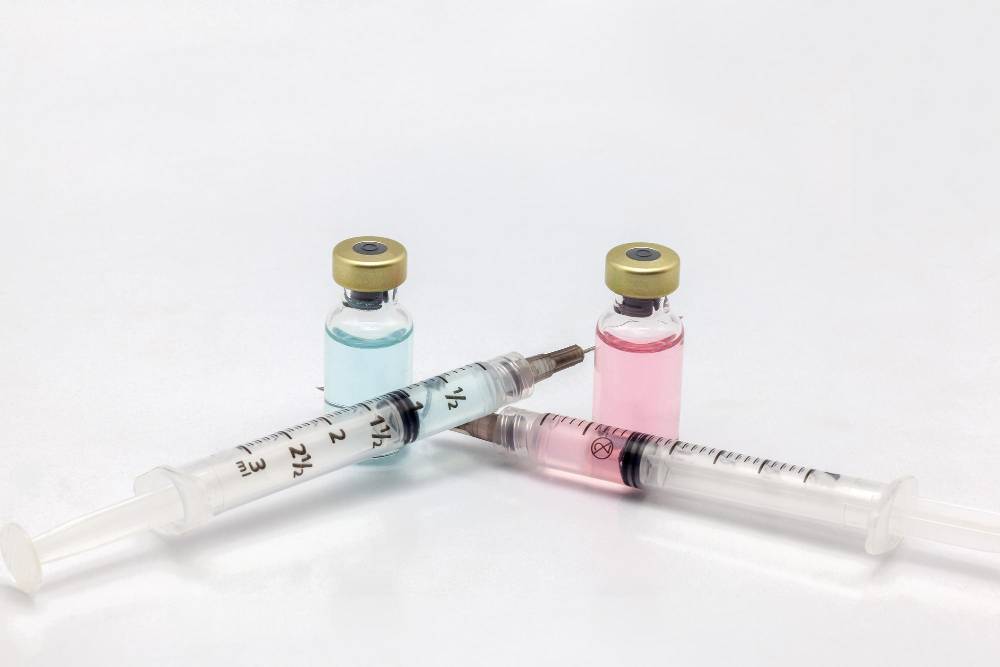
Glutathione and NAD+ Together in One Schedule
Running glutathione and NAD+ together in the same week is possible, and at AHC it is a decision a licensed provider makes rather than something you arrange yourself. Both sit in the longevity program, both are compounded injectables, and each has its own intake form and its own review.
The scheduling side of glutathione and NAD+ together has a clear answer. The claims side does not, and this page is honest about which is which.
What each one is at AHC
AHC’s glutathione and NAD+ are both compounded injectables in the longevity program. Both are given intramuscularly. Neither is an IV drip, which matters because most of what is written online about this combination describes IV infusion in a clinic rather than an injection at home.
| Glutathione | NAD+ | |
| Program | Longevity | Longevity |
| Regulatory status | Compounded, not FDA-approved | Compounded, not FDA-approved |
| Route at AHC | Intramuscular injection | Intramuscular injection |
| Frequency | Twice weekly | Twice weekly, and sometimes up to three times weekly |
| Phases | No phased schedule | A loading phase across the first three weeks, then maintenance |
| Setting | At home, self-administered | At home, self-administered |
| Intake form | Its own form | Its own separate form |
| Where your instructions come from | Emailed after provider approval | Emailed after provider approval |
Compounded medications are prepared by state-licensed compounding pharmacies. They are not FDA-approved and have not been reviewed by the FDA for safety, efficacy, or quality.
That applies to both products here. The FDA’s explanation of drug compounding sets out what compounded means and what it does not.
What glutathione and NAD+ are, in plain terms
Most pages on glutathione and NAD+ together skip straight to benefits. It is worth spending a minute on what these two molecules do, because the gap between that and the marketing is where the confusion lives.
NAD+ is a coenzyme found in every cell. Its main job is carrying electrons through the reactions that turn food into usable energy, and it is also consumed by enzymes involved in DNA repair and cell signalling. It is not a peptide and not a vitamin, although your body builds it from vitamin B3 precursors.
Glutathione is a small molecule built from three amino acids. It takes part in antioxidant reactions inside cells and in how the liver handles certain compounds. It exists in an active form and a spent form, and the ratio between them is what researchers measure when they talk about redox status.
The two are connected through the same metabolic network, which is where the idea of glutathione and NAD+ together comes from. One detail gets flattened almost everywhere, though. The enzyme that converts spent glutathione back to its active form runs on NADPH, a related but different molecule, rather than on NAD+ directly. Marketing copy routinely shortens that to NAD+ recycles glutathione. The real relationship is a step removed, and the difference matters when somebody is using it to justify a combined protocol.
Why AHC uses an intramuscular injection rather than an IV
Nearly everything written about glutathione and NAD+ together describes an IV drip in a clinic. AHC does not do that.
Both halves of glutathione and NAD+ together are dispensed as intramuscular injections you give yourself at home. There is no line, no clinic chair, no infusion rate to manage and no session length to book. That is a different route, a different setting and a different risk profile from the IV content you will find, and it is worth knowing before you import expectations from one into the other.
One common selling point also does not apply here. IV marketing leans on bioavailability, often quoting figures close to one hundred percent. Putting a dose into the bloodstream is not the same as it reaching cells or producing an effect. A number describing how much entered circulation says nothing about what happened next.
The practical difference is where the safety net sits. In a clinic it is the person watching your infusion. At home it is the provider review, your dosage email, and AHC support.
How the two schedules fit into a week
This is the part of glutathione and NAD+ together that has a documented answer.
Glutathione is twice weekly. NAD+ is twice weekly through a loading phase that steps up across the first three weeks, then continues at maintenance, sometimes up to three times weekly. Running glutathione and NAD+ together therefore means four or five injection days in a typical week rather than two.
That is a real change in routine and worth thinking about before you request glutathione and NAD+ together. Keep the days consistent, space them across the week rather than stacking them, and rotate injection sites rather than using the same spot. Site rotation matters more when you are injecting four or five times a week than twice.
Your exact instructions for each product arrive by email from AHC’s system after a provider approves that order. Those emails are the reference, not this page.
Never combine them in the same syringe
This is the one part of glutathione and NAD+ together worth being firm about.
Being prescribed glutathione and NAD+ together in the same week does not mean they can be drawn into one syringe. Compatibility, concentration, stability and sterility are pharmacy questions, not something to work out at your kitchen table. Combining two sterile products yourself also breaks the sterility of both.
Glutathione and NAD+ together means two separate injections, prepared and given separately, exactly as your dosage emails describe. If the emails do not answer a question about sequence or timing, contact support rather than improvising.
What the provider review covers
AHC does not publish approval criteria, because there is no checklist that produces a yes or a no on glutathione and NAD+ together. Each review is individual, and a provider is working with what your intake tells them.
- Your medical history and any conditions you have disclosed
- Every medication, treatment and over-the-counter product you currently take
- Any allergy history or previous reaction to an injectable
- Whether you are starting both at once or adding one to an existing plan
- Anything in your intake that needs clarifying before a decision
Be thorough. A request to run glutathione and NAD+ together is assessed on the information you supply, and a provider cannot weigh something you left out. If you are under the care of another clinician for anything significant, say so on the intake. Some ongoing treatments change the risk picture enough that they need that clinician involved too.
The things people leave off an intake are often the ones that matter here. Supplements count, so do products bought without a prescription, anything taken occasionally, and treatments prescribed by someone else. None of it is a test you can fail. It is what the review runs on.
The provider retains full discretion to approve or decline glutathione and NAD+ together. A request is reviewed, not granted.
Why the synergy story is worth questioning
Search glutathione and NAD+ together and you will find confident claims about the two working as a pair. Energy, detox, anti-aging, brain fog, recovery, immune support. It is worth understanding where those claims come from.
They come from cell biology. NAD+ and glutathione are both real molecules with well described roles inside cells, and those roles are connected through shared metabolic pathways. That part is established science and it is not in dispute.
What does not follow is the leap from there to an outcome. A molecule being essential inside your cells does not establish that injecting more of it improves how a healthy person feels or functions. Those are two different claims, and the second one is the one being sold.
The distinction that matters. Established biology is not the same as a proven outcome. A study can show that a level in the blood went up without showing that anybody felt better, performed better or aged more slowly.
AHC does not claim that glutathione and NAD+ together produce a result that either produces alone. There is no approved claim language for it, and no outcome data to point at. Results vary by individual and depend on adherence, clinical guidance, and lifestyle factors.
This is a narrower answer than most pages on this pairing will give you, and it is worth knowing why. A page promising a specific outcome is either citing cell studies as though they were human results, or citing nothing at all. Read a few and notice how rarely a specific trial in people is named.
None of which means the products do nothing. It means nobody can honestly tell you in advance what they will do for you, and a seller promising otherwise is telling you something they cannot know.
Starting both at once or adding one later
Asking for glutathione and NAD+ together is two different requests depending on where you are starting, and a provider treats them differently.
Adding a second product to a plan you have already tolerated gives a provider something to work with. They know how you responded to the first one, whether you had injection site reactions, and whether anything needed adjusting. That history is useful information.
Starting both from scratch removes that. If something does not agree with you in week two, there is no way to tell which product it came from, or whether it was the pace of starting two injectables at once. That is not a reason it cannot be done. It is a reason a provider may ask questions first, or suggest a sequence.
If you are new to injectables entirely, expect more questions rather than fewer. Somebody who has been injecting weekly for six months is in a different position from somebody who has never done it.
What to watch for once you start
Running glutathione and NAD+ together means two injectables, and both can produce reactions.
Flushing, warmth or a heavy feeling during or after an NAD+ injection is commonly reported. Injection site soreness, redness or a small lump can happen with either product. Those are things to mention to support so they are on record.
Some symptoms are not a matter of adjusting and waiting. Difficulty breathing, swelling of the face or throat, widespread hives, severe chills or shaking, a high fever, chest pain, or feeling faint need medical care rather than a message. Seek emergency care, then tell AHC support what happened.
Do not label a symptom a detox reaction. That phrase is common in this corner of the internet and it delays people getting things looked at. A reaction during or after an injection can be a rate issue, an allergy, a product problem or something unrelated, and none of those are distinguishable by guessing.
Keep a short note of the date, which product, which site and what happened. If you do end up speaking to a clinician about glutathione and NAD+ together, that record is far more useful than a recollection.
How to ask AHC about running both
The route to getting glutathione and NAD+ together reviewed is short if you are already a patient.
- Contact AHC support through live chat on the website or at [email protected] and say which product you already have and which you are asking about.
- Complete the separate medical intake form for the product you are adding. Every medication at AHC has its own.
- List everything you take on that intake, including anything from another prescriber and anything over the counter.
- Wait for the provider decision. Payment is taken at intake and does not guarantee medication.
- If approved, your dosage instructions arrive by email and your order ships cold chain, included at no additional cost.
- Contact support if anything feels wrong once you start, rather than adjusting on your own.
Exploring the longevity program? A licensed provider reviews every order and decides what is appropriate. See the AHC longevity program to understand what is involved.
The short version. Glutathione and NAD+ together means two intake forms, two provider reviews, two separate injections that are never mixed in one syringe, and four or five injection days a week. Whether it suits you is a clinical decision, and AHC makes no claim about what the pairing does.
Frequently asked questions
Can I take glutathione and NAD+ in the same week?
Glutathione and NAD+ together in one week is possible and it is a provider decision. Both are prescription compounded injectables at AHC, so a licensed provider reviews the request against your medical history and retains full discretion to approve or decline.
Can they be mixed in the same syringe?
No. Two medications prescribed in the same week are still two separate injections. Compatibility and sterility are pharmacy questions, and combining sterile products yourself breaks the sterility of both.
Can I inject them on the same day?
Your dosage emails are the reference for timing and sequence. If they do not answer the question, contact support rather than deciding on your own.
How often is each one injected?
Glutathione is twice weekly. NAD+ is twice weekly, with a loading phase across the first three weeks before maintenance, and sometimes up to three times weekly. Running both means four or five injection days in a typical week.
Do I need a separate intake form for each?
Yes. Every medication at AHC has its own medical intake form, so asking about glutathione and NAD+ together means two separate submissions even if you are already a patient.
Does taking them together make either one work better?
AHC makes no claim that glutathione and NAD+ together produce a result either produces alone. Plenty of pages online say otherwise. Those claims come from cell biology rather than from outcome data in people.
Are glutathione and NAD+ FDA-approved?
No. Neither product in glutathione and NAD+ together is FDA-approved. Both are compounded medications. They are not FDA-approved and have not been reviewed by the FDA for safety, efficacy, or quality.
Can I run both alongside a GLP-1?
NAD+ compounding with GLP-1 medication requires a provider consultation and costs $250 for all doses. For any other combination, contact support so a provider can review it. Do not assume the same terms apply.
What if I feel flushed or warm after an NAD+ injection?
Flushing and warmth are commonly reported with NAD+ injections. Tell support so it is on record. If you have difficulty breathing, swelling, chest pain or feel faint, seek medical care first.
Where do my dosage instructions come from?
AHC’s system emails them to you after a licensed provider approves each order. AHC does not publish dosing charts on public pages.
Can I start both at the same time?
That is part of what the provider assesses. Starting two new injectables at once is a different proposition from adding one to a plan you have already tolerated, and the review reflects that.
Should I start with one and add the other later?
That is part of what the provider assesses. Adding to a plan you have tolerated gives them response history to work with. Starting both at once removes that, so expect questions.
Is this the same as a NAD+ and glutathione IV drip?
No. AHC dispenses intramuscular injections for use at home. Most content online about glutathione and NAD+ together describes IV infusion in a clinic, which is a different route, a different setting and a different risk profile.
Do I deal with the pharmacy about any of this?
No. Customers never interact with the pharmacy at any point. Every question goes through AHC support.
Want to talk it through first? A provider consultation costs $29.99 if you would rather ask about glutathione and NAD+ together before you submit anything. See the AHC patient FAQs or contact support through live chat.
Medical Disclaimer
Compounded medications are prepared by state-licensed compounding pharmacies. They are not FDA-approved and have not been reviewed by the FDA for safety, efficacy, or quality. Results vary by individual and depend on adherence, clinical guidance, and lifestyle factors. This content is for informational purposes only and is not medical advice. Clinical services are provided by independently contracted, U.S.-licensed clinicians. Speak with a licensed provider about your individual situation. If you experience severe symptoms, seek emergency medical care. For questions about your treatment, contact AHC support through live chat on the website or at [email protected]